Privacy Hedge Planting in Forest Hill MD
Front yard privacy is one of the most common concerns we hear from homeowners in Forest Hill. As neighborhoods continue to fill in and homes are built closer together, it can feel like your outdoor space is always on display. A thoughtfully designed hedge can change that completely.
At Harvest Outdoor Living, we design and install privacy hedge systems that look natural, grow properly in Harford County’s soil conditions, and hold up through Maryland’s changing seasons. In this post, we’ll break down the best hedge species for our local climate, how spacing affects long-term results, what maintenance really looks like, and how plant size impacts cost and timeline.
Why privacy hedges are a smart front yard investment
Unlike a fence, a hedge feels soft and integrated into your landscape. It adds curb appeal while screening neighboring homes, sidewalks, and busy streets. In Forest Hill, where many properties have open front yards, this kind of natural buffer can dramatically change how you experience your home.
A well-planned hedge can:
-
- Create year-round screening from neighbors who feel too close
- Reduce road noise and headlight glare
- Frame your driveway or front walkway for a more finished look
- Increase property value through mature landscaping
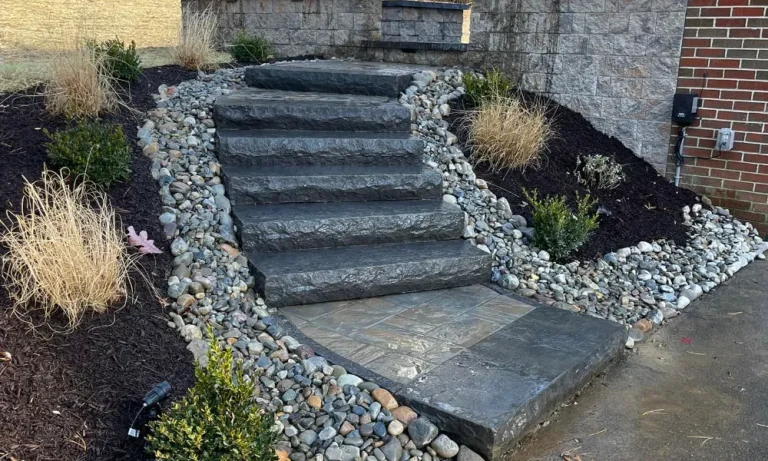
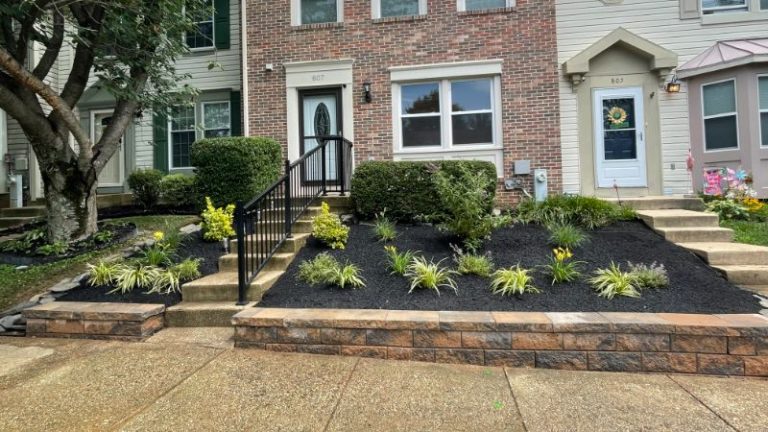
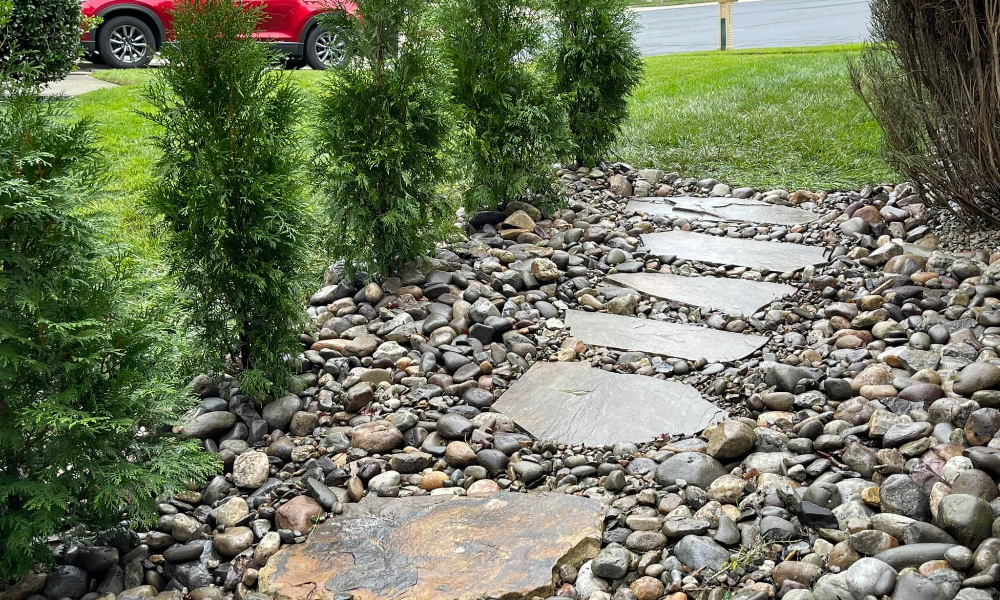
When paired with elements like custom walkways, planting beds, or even a low retaining wall, a hedge becomes part of a complete front yard design rather than a single row of plants.
Best hedge species for Forest Hill’s climate and soil
Harford County sits in USDA Zone 7a. We experience humid summers, cold winters, and a mix of clay-heavy and loamy soils. Choosing the wrong plant often leads to thinning, disease, or uneven growth. Selecting the right species from the start avoids years of frustration.
Here are several hedge options that consistently perform well in Forest Hill:
1. Green Giant Arborvitae
A popular choice for tall privacy screens. It grows quickly, tolerates clay soil, and stays dense when properly spaced.
What to expect:
-
-
- Mature height of 30 to 40 feet if left untrimmed
- Fast growth rate, often 2 to 3 feet per year in ideal conditions
- Excellent year-round screening
-
Best use: Large front yards where homeowners want quick, tall coverage and have room for long-term growth.
2. Skip Laurel (Prunus laurocerasus ‘Schipkaensis’)
A broadleaf evergreen that provides a more formal appearance with glossy leaves.
What to expect:
-
-
- Mature height of 10 to 15 feet
- Handles partial shade well
- Dense, thick foliage ideal for blocking views
-
Best use: Properties that need medium-height screening closer to sidewalks or driveways.
3. American Holly
A native evergreen option with a classic appearance and strong winter interest.
What to expect:
-
-
- Mature height of 15 to 30 feet depending on variety
- Excellent cold tolerance
- Wildlife-friendly berries when male and female plants are paired
-
Best use: Natural-style landscapes where homeowners want both privacy and native plant benefits.
Choosing between these options depends on available space, sun exposure, and how tall you want your hedge long term. During a site visit, we evaluate drainage, soil compaction, and grading to make sure your planting investment succeeds.
Spacing and long-term height expectations
Spacing is one of the most misunderstood parts of hedge planting. Plant too close, and you create overcrowding, poor airflow, and future disease. Plant too far apart, and you wait years for proper screening.
For example:
-
- Green Giant Arborvitae are typically spaced 5 to 6 feet on center
- Skip Laurels are often spaced 4 to 5 feet on center
- Hollies vary based on variety, usually 5 to 8 feet on center
It is important to plan for mature width, not just current pot size. A 6-foot-tall arborvitae in a container might only be 2 feet wide today, but in five years it may spread to 6 or 8 feet wide.
We also discuss realistic height management. Many homeowners say they want a 6-foot hedge, but plant varieties that naturally grow 30 feet tall. That means committing to regular trimming to control height. Selecting a species that naturally matures near your desired height reduces long-term maintenance and preserves plant health.
This level of planning is why professional installation matters. Proper layout, string lines, and accurate spacing ensure your hedge grows into a continuous screen instead of a patchy row.
Maintenance and irrigation considerations
A hedge is not a set-it-and-forget-it feature. It is living material that needs proper care, especially in the first two to three years.
Watering: New hedge installations require consistent watering during establishment. Many Forest Hill properties have compacted soil that drains slowly. We often recommend installing a dedicated low-voltage lighting plan alongside a drip irrigation system to protect root zones and prevent overwatering from lawn sprinklers. Drip lines deliver water directly to the base of each plant, improving survival rates.
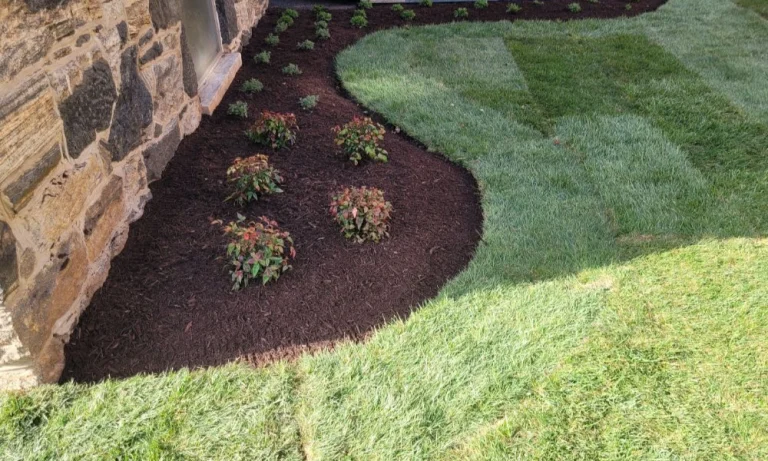
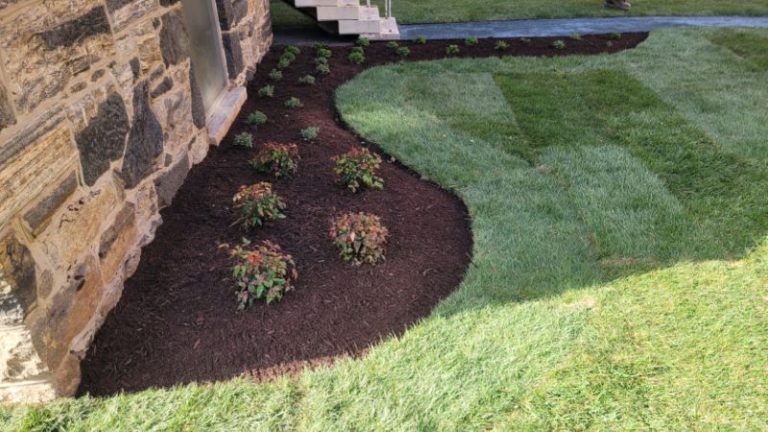
Mulching: A defined mulch bed around your hedge helps regulate soil temperature and reduce weed competition. Integrating the hedge into a professionally edged planting bed also keeps turf grass from invading root systems.
Pruning: Fast-growing species like Green Giants may require annual shaping. Broadleaf hedges such as Skip Laurel benefit from selective pruning rather than aggressive shearing.
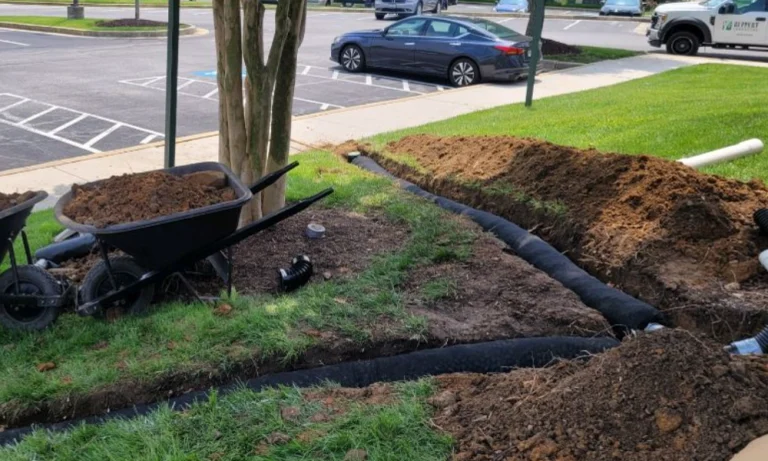
Drainage: If your front yard slopes toward the street or driveway, improper drainage can saturate roots. In those cases, we may recommend subtle grading adjustments or tying the hedge into a broader landscaping and drainage solution.
Hiring a professional team ensures irrigation lines are installed correctly, plants are set at proper depth, and soil is amended where needed. DIY installations often fail because roots are planted too deep or watering schedules are inconsistent.
Cost comparison: larger plants vs smaller plants
Privacy is emotional. Most homeowners want results quickly. The question becomes how fast you want that privacy and how much you want to invest upfront.
Larger plants
-
- Higher upfront material and labor cost
- Instant visual screening or near-instant coverage
- Reduced waiting period
Smaller plants
-
- Lower initial cost
- Longer wait time for full screening
- May require more years of shaping and care
For example, installing 8 to 10 foot arborvitae provides immediate privacy but costs significantly more than planting 4 to 5 foot specimens. Over time, both can reach the same height, but the timeline differs.
We walk homeowners through these options during consultations. If you are also planning hardscape upgrades such as a new front paver walkway or driveway, we can coordinate planting and construction together for efficiency. Reviewing both the Landscape Pricing Guide and Hardscape Pricing Guide on our website helps you understand how plant size and project scope influence overall investment.
In many cases, clients choose a hybrid approach, installing larger plants in high-visibility areas and smaller plants along secondary property lines.
Mini case study: Forest Hill front yard privacy transformation
A recent homeowner in Forest Hill contacted us because their neighbor’s new two-story addition overlooked their front porch. They felt exposed every time they stepped outside.
After evaluating sun exposure and soil conditions, we designed a staggered row of Skip Laurels combined with lower foundation plantings to soften the base. We integrated a defined mulch bed and subtle landscape lighting to highlight the hedge at night.
Within one season, the property felt enclosed and comfortable. The homeowners told us they started using their front porch again because it finally felt private. That is the impact thoughtful planting can have.
Proudly serving Harford County and beyond
Harvest Outdoor Living provides professional hedge planting, landscape design, and hardscape installation in:
-
- Bel Air
- Abingdon
- Aberdeen
- Churchville
- Fallston
- Forest Hill
- Havre De Grace
- Jarrettsville
- Perry Hall
- White Marsh
- And surrounding Harford County areas
If you are unsure whether your property is within our service range, you can view the full list on our service area page.
Ready for real front yard privacy?
If you are tired of feeling exposed in your own yard, let’s design a hedge that actually solves the problem.
Front yard privacy requires more than planting a row of shrubs. It takes proper species selection, accurate spacing, irrigation planning, and professional installation to ensure long-term success. Our team will evaluate your property, discuss plant size options, and provide clear guidance on investment and timeline.
Request your estimate today and take the first step toward a front yard that feels private, finished, and built to thrive in Forest Hill.