What Is a Drainage Swale and Where Should It Be Used in My Landscape?
Standing water and soggy lawn areas are some of the most common landscaping problems we hear about from homeowners across Harford County. When water has nowhere to go, it can soften soil around your foundation, wash mulch out of planting beds, and even undermine patios and walkways. One of the simplest, most effective ways to move surface water is with a drainage swale.
At Harvest Outdoor Living, we design drainage swales and grading solutions that fit naturally into your landscape and solve water issues at the source. In this post, we’ll explain what a drainage swale is, where it works best in Maryland yards, what a properly built swale includes, and how we tie swales into larger landscape and hardscape projects.
Why drainage swales are a smart landscaping investment
A drainage swale is one of those improvements that protects everything else you’ve invested in outdoors. If water consistently pools in the same places, it is only a matter of time before you see damage in turf, garden beds, or hardscaping.
A well-designed swale can:
-
- Redirect surface runoff away from foundations and basements
- Reduce standing water in low spots that stay soggy for days
- Prevent erosion that strips topsoil and exposes plant roots
- Protect patios, walkways, and retaining walls from water-related shifting
When paired with elements like walkways, planting beds, or a retaining wall system, a swale becomes part of a complete drainage plan rather than a simple ditch running through the yard.
What is a drainage swale and how it works
A drainage swale is a shallow, gently sloped channel that moves surface water from problem areas to a safe discharge point. It relies on gravity and proper grading, not underground pipes, to carry runoff away from homes, patios, and low-lying lawn areas.
In Harford County, swales are especially useful because many properties deal with clay-heavy soil that drains slowly. During heavy rainfall, that soil can become saturated and force water to flow across the surface. A swale gives that water a controlled path so it does not collect in the wrong places.
If designed correctly, a swale can also be visually integrated using stone, mulch, and erosion-resistant plantings so it feels like part of the landscape design.
Key features of a well-designed drainage swale
Not all swales perform the same. The ones that fail usually have an inconsistent grade, are too shallow in the wrong spots, or are built without any erosion control. A swale should move water consistently, and it should hold its shape over time.
Here are the elements we focus on when building swales in Maryland:
1. Proper grading that creates steady flow
A swale needs a consistent slope to keep water moving. Too flat and water will still pool. Too steep and water will accelerate, cutting into soil and causing washouts.
What to expect:
-
-
- A gentle grade, often in the 2 to 4 percent range, depending on site conditions
- Flow that directs water away from the home without creating new low spots
- Transitions that blend naturally into surrounding lawn or planting beds
-
Best use: Yards where runoff consistently crosses the same area, especially between the home and lower parts of the property.
2. A stable channel shape that does not become a trench
A swale should be shallow and contoured, not a deep trench. The goal is to move water safely without creating a hazard or making the yard difficult to use.
What to expect:
-
-
- Soft side slopes that can be mowed if the swale is turf-lined
- A defined low point that directs water, without sharp edges that erode easily
- Placement that avoids cutting through the most usable parts of the yard
-
Best use: Properties where you want drainage improvement without sacrificing usable lawn space.
3. Erosion control materials and planting
Once water has a defined path, the next issue is preventing the swale from washing out. Maryland downpours can move a surprising amount of soil in a short time.
What to expect:
-
-
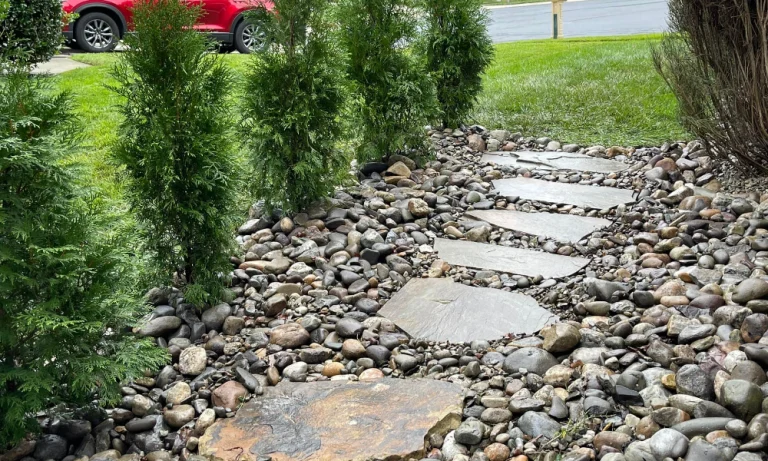
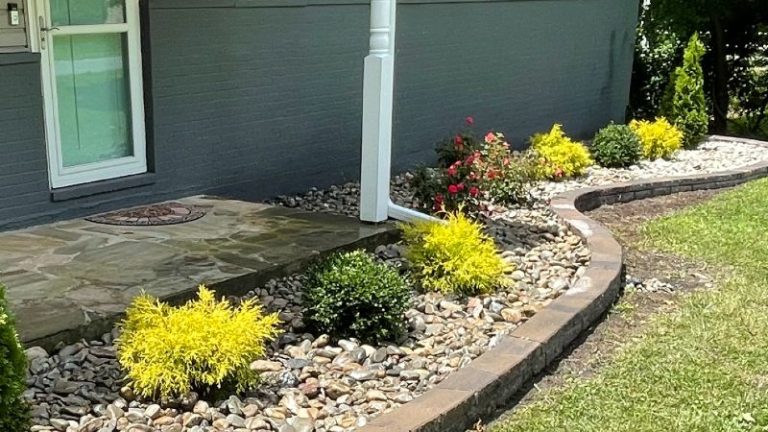
- Optional lining with river rock or gravel when flow is stronger
- Mulch and planting where flow is gentler and infiltration is the goal
- Native or deep-rooted plants that stabilize edges and reduce sediment
-
Best use: Sloped yards and areas where erosion has already started near beds, fences, or patios.
Choosing the right swale design depends on slope, soil, and where the water needs to go. During a site visit, we evaluate your runoff pattern, yard elevations, and any existing hardscape features that could be affected.
Where a drainage swale works best on Harford County properties
Swales are not a one-size-fits-all fix, but they are extremely effective in the right locations. Most of the time, they work best when you need to manage surface water movement across the yard.
For example:
-
- At the base of a slope to intercept runoff before it reaches the home or patio
- Along a property line to manage water entering from neighboring yards or roads
- Between hardscape features where patios or walls have changed the natural flow of water
It is important to remember that a swale must discharge properly. If the swale ends in a low spot with no outlet, it can simply relocate the problem. That is why professional grading and planning matter. In some yards, a swale works best when paired with other drainage measures, such as subsurface piping or a dry creek bed outlet.
This is also why DIY swales often disappoint. It is easy to create a shallow channel, but difficult to get the elevations and flow right without proper tools and experience.
Maintenance and long-term performance considerations
A drainage swale is not a set-it-and-forget-it feature, but it should not require constant attention either. Most maintenance is simple and seasonal, and the better the swale is built, the less you will have to do.
Debris management: Leaves and sediment can collect in the low point of the swale. Occasional clearing keeps flow paths open.
Mulch and stone refresh: If your swale is mulch-lined or rock-lined, you may need small touch-ups over time, especially after major storms.
Plant health: If the swale includes plantings, proper establishment watering matters during the first season. Many homeowners choose to combine swales with new beds and mulch installation so everything is stabilized together.
Lighting and safety: In yards where the swale runs near walkways or patios, landscape lighting can improve nighttime visibility and help the swale feel like a planned design element rather than an afterthought.
Hiring a professional team ensures the swale is graded correctly, stabilized properly, and integrated into the overall landscape so it does not create new problems later.
Cost comparison: drainage swales vs other drainage fixes
Most homeowners want to know where a swale fits compared to other drainage solutions. The cost depends heavily on grading complexity, discharge location, and how much stabilization is required.
Drainage swales
-
- Often cost-effective for managing surface runoff across a wide area
- Can be installed with minimal disruption compared to trenching for pipes
- Can be enhanced to look like a landscape feature with stone and plantings
Underground drainage systems
-
- Better for tight areas where surface grading is not possible
- Typically higher cost due to excavation, pipe, and discharge requirements
- Often paired with swales when both surface and subsurface water are issues
For many properties, the best solution is not choosing one or the other. It is designing the full system so surface water and subsurface saturation are handled together. If you are budgeting for a broader project that also includes outdoor living features, reviewing the Landscape Pricing Guide and Hardscape Pricing Guide can help you understand how drainage work fits into overall project investment.
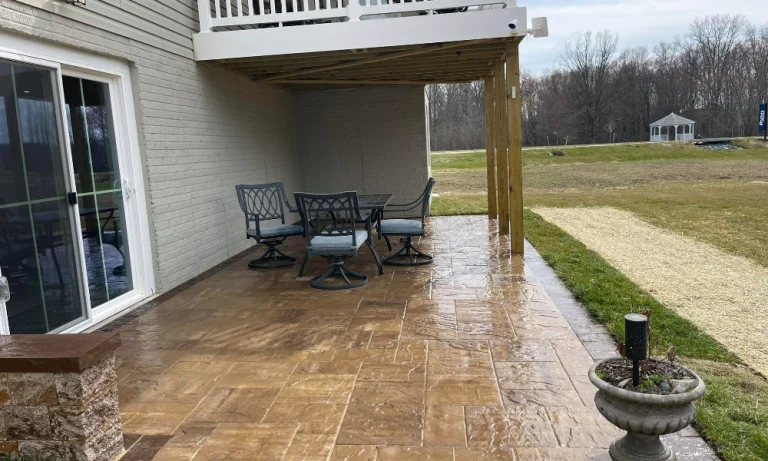
In many cases, we build swales alongside paver patios and walkways because proper drainage planning protects the base and extends the life of the hardscaping.
Mini case study: correcting a chronic soggy yard
A homeowner reached out after dealing with standing water that formed along the side of their home after every storm. The area stayed soggy for days and the mulch in their planting bed regularly washed out.
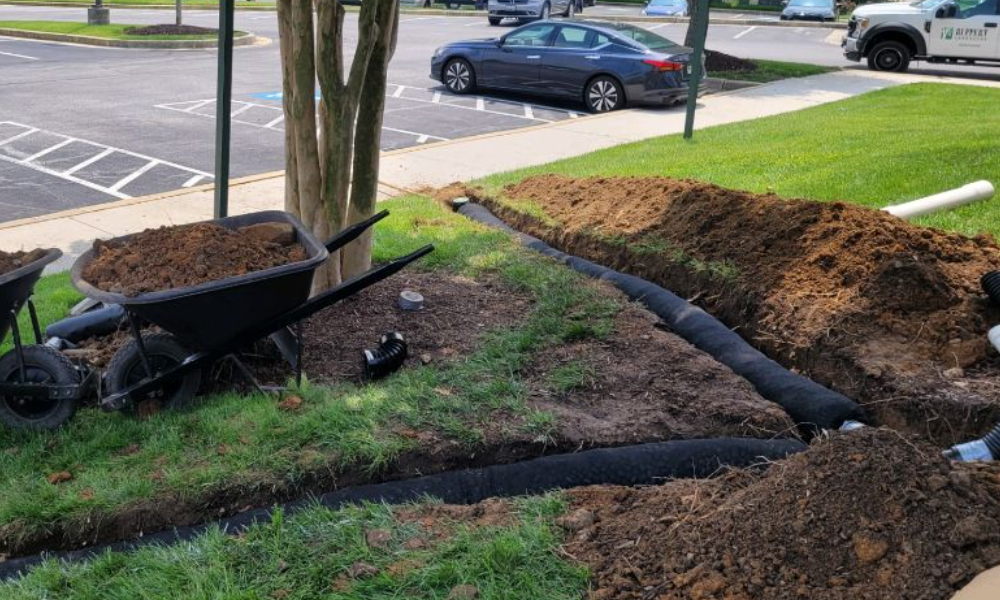
After reviewing the grade, we designed a shallow swale that intercepted runoff from the upper portion of the yard and guided it toward a safer discharge area. We stabilized the channel with stone in the highest-flow section and used plantings and mulch in the lower-flow section to blend it into the bed.
After the next heavy rain, the homeowner immediately noticed the difference. The soggy area dried faster, and water stopped pooling near the foundation.
Proudly serving Harford County and beyond
Harvest Outdoor Living provides professional drainage solutions, landscape installation, and hardscape construction in:
-
- Bel Air
- Abingdon
- Aberdeen
- Churchville
- Fallston
- Forest Hill
- Havre De Grace
- Jarrettsville
- Perry Hall
- White Marsh
- And surrounding Harford County areas
If you are unsure whether your property is within our service range, you can view the full list on our service area page.
Ready to fix your drainage problem for good?
If you are tired of soggy lawn areas, muddy walkways, or water collecting where it should not, let’s take a look at what is happening on your property.
Drainage issues rarely improve on their own, and quick DIY fixes often push water somewhere else without solving the root cause. Our team will evaluate your grading, runoff patterns, and soil conditions, then recommend a drainage plan that protects your landscape and your home.
Request your estimate today and take the first step toward a yard that drains properly, stays healthier, and holds up through Maryland storms.