Incorporating Dry Creek Beds Into Your Landscape
Dry yard areas and drainage problems are some of the most common reasons homeowners in Bel Air reach out for help. When water keeps carving channels through mulch beds, pooling near patios, or rushing off a slope after every storm, the fix needs to be functional, not just cosmetic. A well-designed dry creek bed can solve the water problem while looking like a natural part of the landscape.
At Harvest Outdoor Living, we design and install dry creek beds that actually move water where it needs to go, using proper grading, stone selection, and edge stabilization that holds up in Harford County’s soil and weather. Homeowners work with us because we take drainage seriously, and our reputation reflects that with 41 five-star reviews. In this post, we’ll explain why dry creek beds are such a smart investment, what materials perform best locally, how layout and depth affect performance, what maintenance really looks like, and how to think about cost when you want it done once and done right.
Why dry creek beds are a smart landscape investment
Unlike buried pipes and pop-up emitters that disappear into the yard, a dry creek bed solves drainage problems above ground in a way that can actually enhance curb appeal. It mimics a natural stream channel, captures runoff, and routes stormwater along a controlled path instead of letting it tear through planting beds or settle in low spots.
In Harford County, where we get heavy downpours and plenty of freeze-thaw cycles, a dry creek bed can also reduce long-term wear on surrounding landscape features. Done properly, it becomes part of the design, not a patch.
A well-planned dry creek bed can:
-
- Redirect surface runoff away from foundations, patios, and low lawn areas
- Reduce erosion that washes out mulch, soil, and plant roots
- Break up large open yards with a natural-looking focal element
- Lower maintenance compared to muddy problem areas and constantly repaired edges
When paired with features like walkways and pathways, planting beds, or a low retaining wall to stabilize a slope, a dry creek bed becomes part of a complete drainage and landscape plan, not a standalone fix that creates new problems elsewhere.
Best stone and material choices for Harford County drainage conditions
Harford County properties often have compacted soil and clay content that slows infiltration. That means water tends to run across the surface rather than soaking in quickly, especially during spring storms or quick summer downpours. The right stone mix and base preparation matters because it determines whether the creek bed stays stable or shifts, sinks, or clogs with sediment over time.
Here are several material approaches that consistently perform well in Bel Air, Fallston, Forest Hill, and nearby areas:
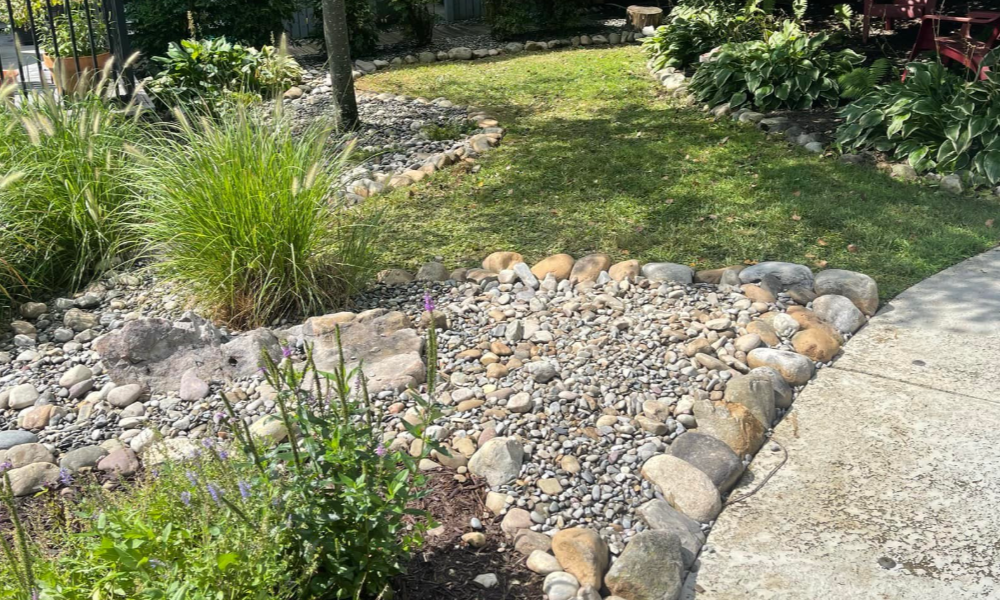
1. Mixed river rock with a stable gravel base
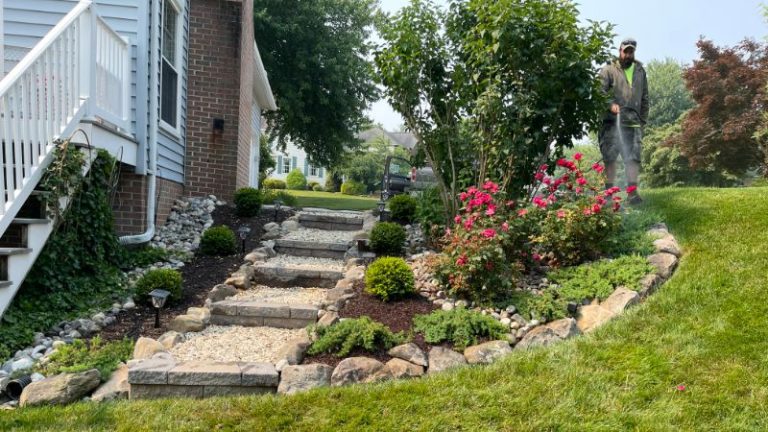
This is the most common dry creek bed build when homeowners want a natural look and reliable performance. A compacted base and a layered stone approach help slow water, reduce splash-out, and keep the channel from rutting.
What to expect:
-
-
- A base layer of compacted gravel for stability and long-term shape
- Top layer of rounded river rock that looks natural and handles flowing water well
- Better resistance to washout compared to “all one size” stone installs
-
Best use: Most residential yards where runoff needs a defined route and homeowners want a clean, natural look year-round.
2. Larger boulders and cobble accents for structure
When a creek bed needs to manage faster moving water, or it sits in a highly visible front yard, adding boulders and larger cobble gives it weight and visual definition. These stones also act as energy breakers that slow runoff and reduce erosion at key bends.
What to expect:
-
-
- More stability at turns and slope transitions
- A more “natural stream” appearance instead of a rock trench
- Better performance where water concentrates after heavy storms
-
Best use: Front yards in Aberdeen or Abingdon where curb appeal matters, and backyards where slopes push runoff with force.
3. Plant-softened edges with native and low-maintenance plantings
A creek bed looks best when it is integrated into the surrounding landscape, not dropped into the lawn like a trench. Strategic plantings along the edges help absorb water, stabilize soil, and soften the stone so it feels like part of the yard.
What to expect:
-
-
- Improved soil stability along the channel edges
- Less sediment washing into the stone over time
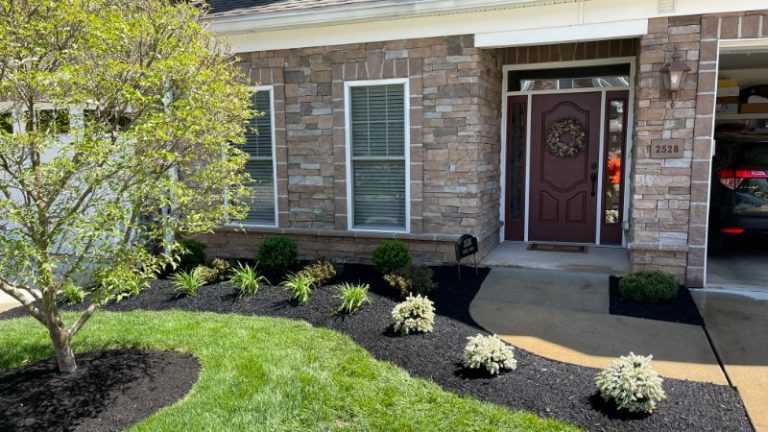
- A finished look that ties into garden beds and foundation plantings
-
Best use: Homeowners who want the creek bed to feel like a designed landscape feature, especially near patios, entry walks, or garden beds.
Choosing between these approaches depends on slope, runoff volume, and where water is coming from. During a site visit, we evaluate the natural flow path, soil compaction, and any existing washout patterns to design a creek bed that actually works in real storms, not just on paper.
Layout, grading, and depth expectations
The biggest misconception with dry creek beds is that they are mainly decorative. If the grading is wrong, the creek bed becomes a rock-filled low spot that holds water and silt. If the channel is too shallow, water jumps the edges during storms and erodes the surrounding lawn or beds. If it is too narrow, it clogs quickly and stops functioning.
For example:
-
- Downspout and roof runoff often requires a defined inlet and a channel sized for concentrated flow
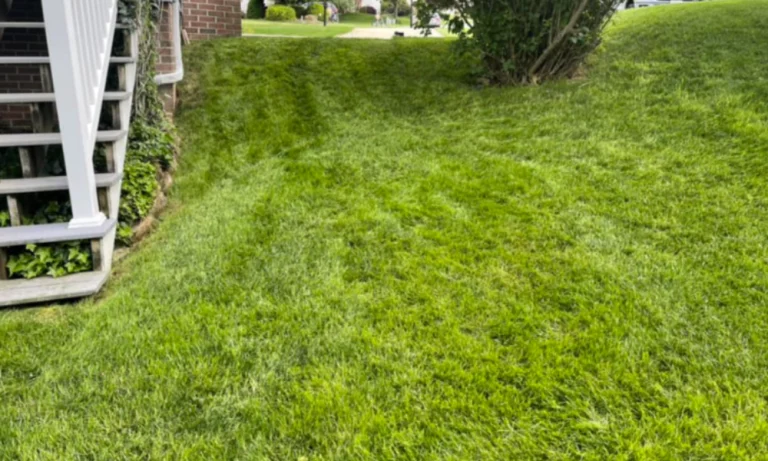
- Slope runoff usually needs a wider, more gradual channel that slows water rather than rushing it downhill
- Low-spot puddling may require subtle regrading so the creek bed actually receives water and then releases it to a proper outlet
We also plan for how the creek bed ties into the rest of the yard. In Churchville and Jarrettsville, it is common for water to cut across open lawn areas and head toward patios, driveways, or foundation beds. A dry creek bed can intercept that flow, but only if the inlet is placed correctly and the end point sends water somewhere safe, not just to another problem area.
This is where professional installation matters. Proper staking, grading, and compaction determines whether the creek bed becomes a long-term solution or a recurring headache that needs to be rebuilt after every major storm.
Maintenance and performance considerations
A dry creek bed is low maintenance, but it is not zero maintenance. The goal is to build it so it stays stable and predictable, with simple upkeep instead of constant repairs.
Sediment control: Over time, fine soil can wash into the stone if edges are not stabilized or if upstream erosion is not addressed. We often integrate planting beds, regrading, or additional drainage solutions to prevent soil from continually feeding into the channel.
Weed prevention: A professional install uses proper separation between soil and stone so weeds are minimized and stone stays clean. DIY installs often skip base prep, which leads to stone sinking and constant weed growth.
Leaf and debris clearing: In wooded areas near Havre De Grace or properties with mature trees, seasonal leaf drop is normal. Occasional clearing keeps the channel open so water can flow without backing up.
Edge stability: The creek bed must hold its line during storms. That can mean boulders, defined transitions into mulch beds, or tying into a small retaining wall where grade changes need extra support.
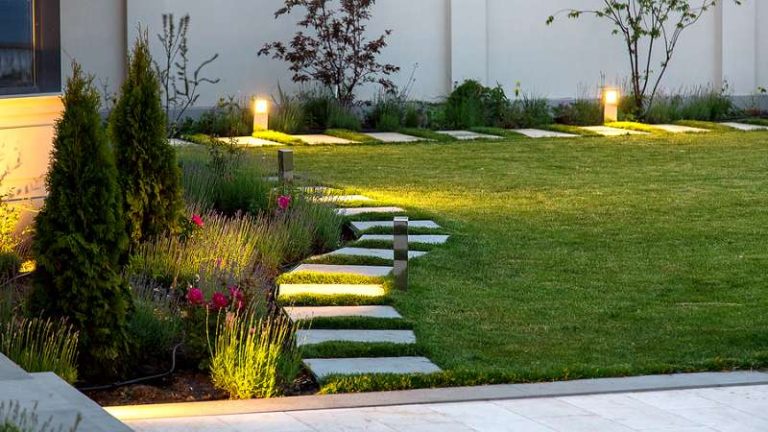
Visibility and safety: If the creek bed runs near a path, steps, or patio, we often recommend incorporating landscape lighting so the area is easy to navigate at night and the feature looks intentional after dark.
Hiring a professional team ensures the creek bed is designed around actual flow patterns, the base is built to resist settlement, and the outlet is planned so you do not simply move the water problem from one spot to another.
Cost comparison: simple creek bed vs fully integrated drainage design
Most homeowners want to know what drives the cost of a dry creek bed. The short answer is that it depends on how much water needs to be managed, how far it must be routed, and how much grading and stabilization is required to make it reliable.
Simple, decorative-function creek bed
-
- Lower excavation and grading requirements
- Shorter runs, usually handling localized runoff
- Limited boulder placement and fewer transitions
Integrated drainage creek bed system
-
- More grading and site shaping to intercept and route water correctly
- Defined inlets from downspouts or slope runoff
- More stone volume, larger boulders, and stronger edge stabilization
A creek bed that connects to other outdoor upgrades can also be more efficient overall. For example, if you are already planning a new paver patio or walkway, it is often smart to design drainage and surface transitions together so water does not undermine new hardscaping.
Reviewing both the Landscape Pricing Guide and Hardscape Pricing Guide can help you understand how scope, materials, and connected features influence the overall investment. In many projects, the best value comes from solving drainage first, then building the landscape and hardscape features on a stable, well-managed site.
Mini case study: Harford County runoff problem turned into a landscape feature
A homeowner in Fallston contacted us after repeated storms washed mulch into their lawn and left a muddy channel cutting across the yard. They had tried adding extra mulch and small edging, but every heavy rain created the same mess and began exposing plant roots.
After evaluating the slope and identifying where runoff concentrated, we designed a dry creek bed to intercept water near the upper yard and route it along a natural curve toward a safer outlet area. We used a layered stone approach for stability, added boulders at key turns, and softened the edges with planting areas to reduce sediment movement. We also coordinated the design so it worked visually with nearby garden beds and future patio plans.
After the next major rain, the difference was immediate. The water followed the channel instead of cutting new paths, the beds held their shape, and the entire area looked intentional, not repaired. That is the goal, a solution that performs during storms and still looks great every day in between.
Proudly serving Harford County and beyond
Harvest Outdoor Living provides professional drainage solutions, landscape design, and hardscape installation in:
-
- Bel Air
- Abingdon
- Aberdeen
- Churchville
- Fallston
- Forest Hill
- Havre De Grace
- Jarrettsville
- Perry Hall
- White Marsh
- And surrounding Harford County areas
If you are unsure whether your property is within our service range, you can view the full list on our service area page.
Ready to fix drainage without sacrificing curb appeal?
If you are tired of puddling, washouts, and muddy problem areas, let’s build a dry creek bed that actually controls water and looks like it belongs.
A dry creek bed only works when it is designed around real runoff patterns, built with correct grading, and stabilized so it holds up through Maryland storms. Our team will evaluate your property, recommend the right layout and materials, and explain how to tie the feature into surrounding landscape and hardscape elements for the best long-term result.
Request your estimate today and take the first step toward a yard that drains properly, looks finished, and stays that way.