Sinking or Uneven Pavers? How to Fix It for Good
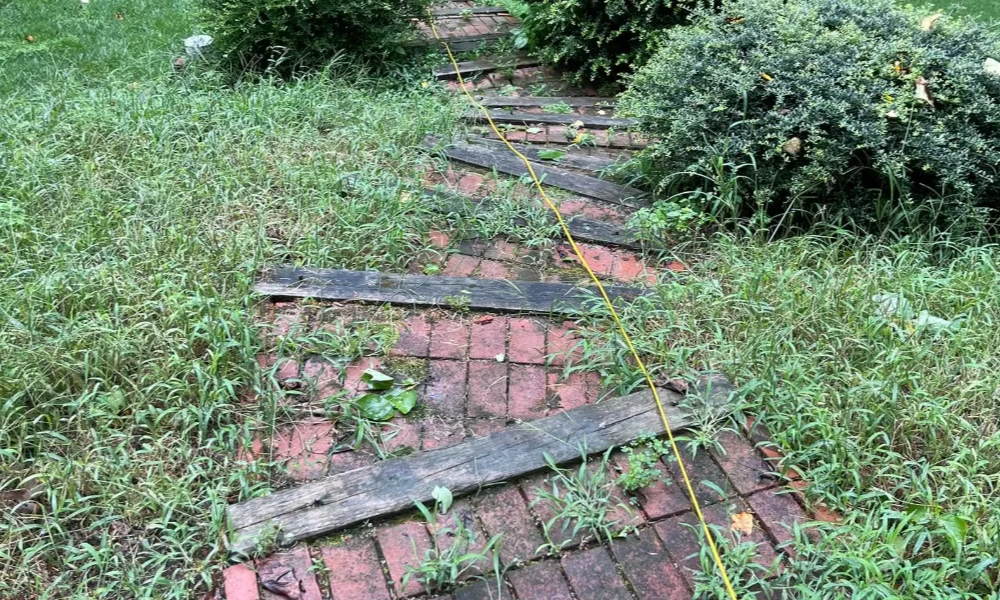
Sinking pavers rarely start as a “big problem.” Homeowners in Bel Air usually notice a low spot that holds water, a few pavers that wobble underfoot, or a slight lip that catches your toe. But those early signs often point to something underneath the surface, base failure, drainage issues, or edge restraints that were never installed correctly.
At Harvest Outdoor Living, we fix failing paver patios, walkways, and driveways by finding the root cause and rebuilding the affected areas the right way. This is not a quick re-level and walk away approach. Our team focuses on proper excavation, compaction, and water management, and our local reputation reflects that with 41 five-star reviews. In this post, we’ll cover the most common warning signs, what typically causes pavers to sink or lift in Harford County soils, why surface-only repairs do not last, and what a proper repair process should look like.
Why uneven pavers are more than a cosmetic issue
A paver surface is only as stable as the foundation beneath it. When sections settle or heave, the problem usually spreads. Water collects in the low areas, winter freeze-thaw amplifies movement, and joint sand begins to wash out. Over time, a small problem turns into a trip hazard and a maintenance headache.
A properly rebuilt paver surface can:
-
- Eliminate tripping and uneven transitions around doors, steps, and edges
- Stop water from pooling and eroding base material
- Restore a clean, finished look to your patio, walkway, or driveway
- Protect adjacent landscape beds from washout and muddy edges
If your pavers connect to other outdoor features like a walkway, a patio, or areas near foundation plantings and drainage swales, leveling the surface without fixing the cause can create new issues elsewhere. That is why a full evaluation matters.
Common signs your paver installation is failing
Some paver problems are obvious. Others look minor until you know what to look for. If you notice any of the following, it is worth having the base and drainage evaluated.
Here are the most common red flags:
-
- Low or sunken areas that collect water after rainfall
- Raised or heaving pavers, especially after winter
- Pavers that rock, shift, or feel loose when you walk on them
- Edges that spread outward or no longer hold a straight line
- Joint sand washing out repeatedly, followed by weeds or ants
If you are seeing these symptoms on a patio, walkway, driveway, or pool deck, it is rarely “just settling.” Something is compromising the base or moving water through the system in a way it was not designed to handle.
Most common causes of sinking, shifting, and lifting pavers
Harford County properties can vary by neighborhood, but we see the same root issues over and over in Abingdon, Fallston, Forest Hill, and Jarrettsville. Most failures trace back to shortcuts during installation or drainage problems that were never addressed.
1. Improper base depth and compaction
Base failure is the number one reason pavers stop staying level. Many installs are excavated too shallow, built with the wrong base material, or compacted poorly. You can often spot this when a surface looks fine for a short time, then starts to dip, especially where people walk most or where water concentrates.
What to expect:
-
-
- Shallow excavation that cannot support the load of the pavers over time
- Base material that breaks down or shifts under saturated conditions
- Uneven compaction that creates soft spots and future settling
-
Best use: A professional rebuild that corrects the base to proper depth and compaction standards, instead of repeatedly re-leveling the surface.
2. Poor drainage and water movement under the pavers
Water is the silent destroyer of paver systems. If your patio or walkway holds water, or if runoff flows across it during storms, water can saturate the base and cause washout. In winter, that trapped moisture can freeze and lift sections of the patio, then drop them as it thaws.
What to expect:
-
-
- Pooling in low spots that accelerates joint sand loss
- Soft, saturated base that settles under foot traffic or furniture loads
- Frost heave and seasonal movement where drainage was never planned
-
Best use: Repairs that include grading corrections or integrated drainage solutions, not just surface leveling.
3. Missing or failing edge restraints
Edge restraints lock a paver surface in place. When they are missing, weak, or installed incorrectly, the entire field of pavers can spread. Once that happens, joints open up, sand washes out faster, and you start seeing movement at the perimeter that eventually works its way inward.
What to expect:
-
-
- Edges that flare outward or sink first
- Wider joints and shifting patterns
- Recurring issues even after “re-sanding”
-
Best use: Rebuild sections with proper restraints and perimeter stabilization, especially near lawn edges and planting beds.
4. Natural settling, age, and root pressure
Even well-built pavers can change over time. Soil conditions shift, roots grow, and drainage patterns evolve. But in many cases, “age” is blamed when the real issue is that the original installation did not meet best practices from the beginning.
What to expect:
-
-
- Localized heaving near tree roots or tight planting beds
- Small settling after many years, especially at transitions and corners
- Wider issues if the original base and drainage were underbuilt
-
Best use: A targeted repair when the problem is isolated, or a full rebuild when failures are widespread.
Why surface-level fixes rarely last
It is tempting to pull a few pavers, throw some sand underneath, and call it done. Sometimes that makes the surface look better for a short time. But if the base is soft, the drainage is wrong, or water is washing out the bedding layer, the problem comes right back.
We are often called after homeowners have paid for:
-
- Quick re-leveling without excavation
- Repeated re-sanding of joints
- Spot repairs that ignore how water moves across the patio
If you are seeing the same dips, rocking pavers, or pooling areas year after year, the fix needs to address what is happening underneath, not just the surface.
The right way to fix failing pavers
At Harvest Outdoor Living, our approach is to diagnose first, then repair in a way that stops the issue from returning. The correct fix depends on whether the failure is isolated or systemic, and whether water movement is part of the problem.
Our proven process
-
- Remove pavers carefully so they can be reused when possible
- Inspect and excavate the failed areas to confirm base depth, condition, and soft spots
- Rebuild the base properly using appropriate material and compaction in layers
- Correct drainage and grading so water does not saturate and undermine the system
- Reinstall pavers with proper edge restraint and clean alignment
- Finish with joint stabilization using polymeric sand where appropriate
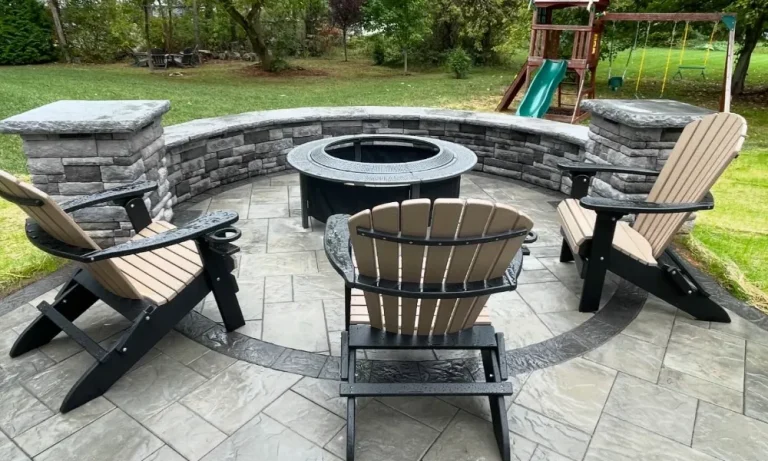
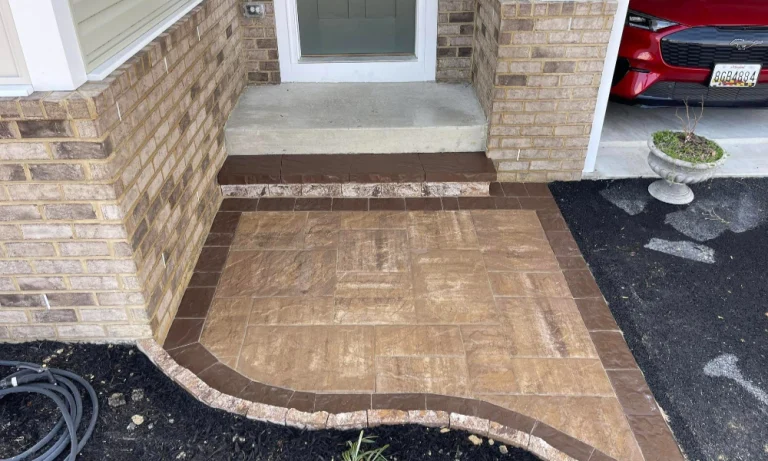
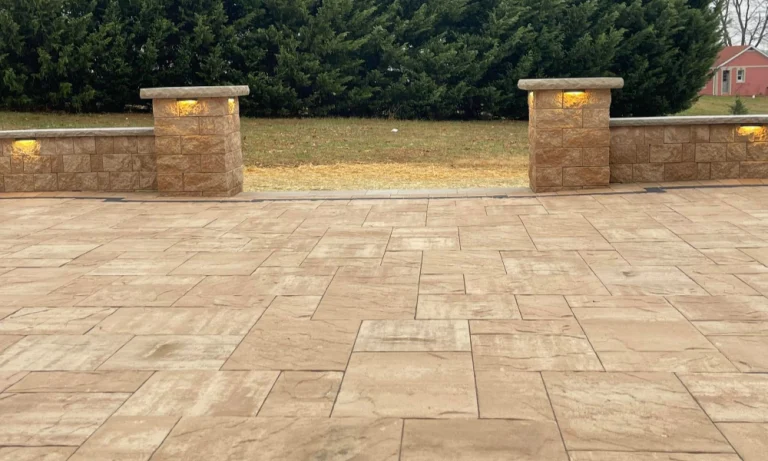
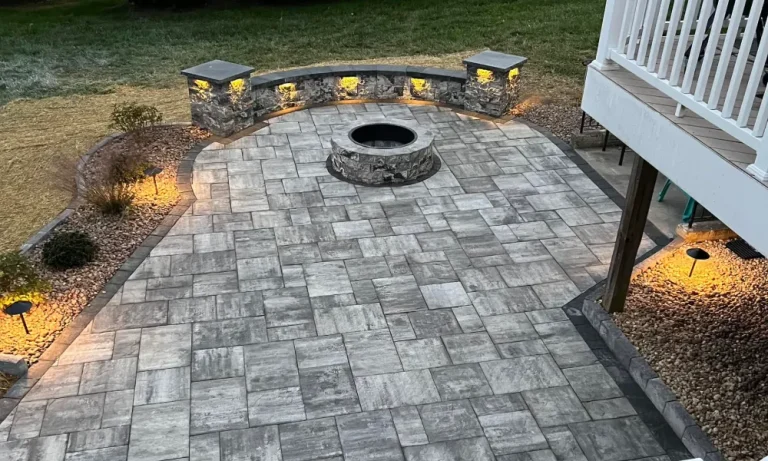
Many homeowners also use repairs as a chance to upgrade. If you want to refresh the pattern, add a border, integrate landscape lighting, or build a seating wall while the area is open, it can be a smart time to improve the space without duplicating labor later.
Repair vs replacement: what makes the most sense?
Some projects can be repaired effectively. Others cost more in the long run if you keep patching them.
Repair is usually a good fit when:
-
- Only a small area has settled, such as near a downspout outlet
- The rest of the patio or walkway is stable and properly built
- The cause is clear and can be corrected, like improving drainage at one edge
Replacement or full rebuild is usually smarter when:
-
- Multiple low spots or heaved sections show widespread base failure
- Water pools across large areas of the surface
- Edges are spreading and joints are opening throughout the field
If the original installation was underbuilt, a full tear-out and rebuild often becomes the most cost-effective path because it permanently corrects the foundation and drainage instead of repeatedly paying for temporary fixes. Reviewing the Hardscape Pricing Guide can help you understand what impacts rebuild cost, while the Landscape Pricing Guide is useful if surrounding beds, grading, or drainage work is part of the solution.
Mini case study: fixing a sinking patio section in Harford County
A homeowner in Forest Hill reached out after a patio corner kept sinking and collecting water after every rain. They had already tried re-sanding the joints and re-leveling a handful of pavers, but the low spot returned within months and started spreading.
We found that runoff was feeding that corner, saturating the base and washing out bedding material. Our repair involved lifting and resetting the affected area, rebuilding the base, correcting the grade, and tying the patio edge into a broader drainage plan so water no longer concentrated there.
After the repair, the surface stayed level through storms and winter freezes, and the patio finally drained the way it should. That is what it takes to make a repair last, solve the cause, not the symptom.
Proudly serving Harford County and beyond
Harvest Outdoor Living provides professional paver patio construction, hardscape repair, and landscape services in:
-
- Bel Air
- Abingdon
- Aberdeen
- Churchville
- Fallston
- Forest Hill
- Havre De Grace
- Jarrettsville
- Perry Hall
- White Marsh
- And surrounding Harford County areas
If you are unsure whether your property is within our service range, you can view the full list on our service area page.
Ready to fix your sinking or uneven pavers for good?
If your patio or walkway is becoming a trip hazard or collecting water, it is time to address the real cause, not just the surface.
Our team will evaluate your paver system, identify whether the issue is base, drainage, edging, or soil movement, and give you clear options for repair versus rebuild. If you choose to upgrade while we are there, we can also incorporate features like lighting, seating walls, planting beds, and drainage improvements so the space feels better than it did originally.
Request your estimate today and let’s get your pavers level, stable, and built to last in Maryland conditions.