Can a Retaining Wall Fix My Backyard Drainage Problem?
If your backyard turns into a soggy mess after every rainfall, you’re not alone. Poor drainage is one of the most common problems we see for homeowners across Harford County, from Abingdon to Jarrettsville. It can wash out mulch, kill plants, create muddy “no-go” zones, and in some cases push water toward your foundation.
One solution people often overlook is a retaining wall. But can a retaining wall actually fix drainage, or does it just add another structure to the yard? The honest answer is: it can be a major part of the fix, but only when it’s designed as part of a complete drainage plan, not as a standalone “barrier.”
Understanding backyard drainage problems
Backyard drainage problems are rarely random. Water follows slope, compaction, and the easiest path available. When your yard has low spots, clay-heavy soil, or runoff coming from higher ground, you get the same cycle every storm: pooling, mud, erosion, and plant stress.
Homeowners in Fallston, Forest Hill, and Churchville often reach out after years of dealing with:
-
- Standing water or soggy areas long after rain
If puddles stick around for more than 24 hours, it usually points to poor grading, compacted soil, or no outlet for water to move through. - Erosion on sloped sections of the yard
When runoff speeds down a hill, it strips soil and mulch, exposes roots, and leaves beds looking worse after every storm. - Water collecting near the foundation
This is the one that needs quick attention. If water is pooling along the house, it can contribute to moisture problems and structural risk over time. - Failing beds and patchy lawn
Plants can’t thrive when their roots stay saturated. You’ll often see yellowing, fungus, and bare turf in the same places every season.
- Standing water or soggy areas long after rain
The cause is usually a combination of factors, including poor slope, clay-heavy soil, downspouts dumping too close to the home, and missing drainage infrastructure. That’s why the best fixes are designed as systems, not quick patches.
What a retaining wall does, and how it helps with drainage
A retaining wall is built to hold soil in place, but it can also reshape how water moves across the yard. In sloped backyards, that matters a lot.
Here’s what a retaining wall can do when it’s planned correctly:
-
- Break up a long slope into manageable levels
Terracing reduces runoff speed. Slower water causes less erosion and is easier to direct into the right drainage features. - Create level zones where water can be controlled
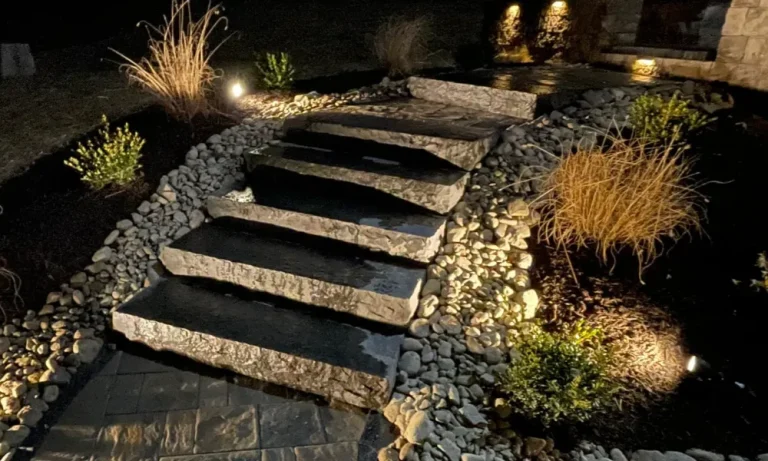
Once you carve out a flat area, it becomes much easier to add a patio, planting beds, steps, or lawn panels without constant washouts. - Support drainage features instead of fighting them
A properly built wall includes drainage stone, filter fabric, and a pipe system so water doesn’t build pressure behind the wall. - Protect nearby hardscaping
Runoff is a common reason patios and walkways shift or settle. Stabilizing the grade often protects the investment you already have.
- Break up a long slope into manageable levels
The key point is this: a retaining wall helps drainage when it changes the grade and includes drainage components. A wall that’s built without proper drainage details can trap water and create a bigger problem.
When a retaining wall is the right solution
Not every wet yard needs a wall. But in the right situation, it can be the turning point between “always muddy” and “finally usable.”
A retaining wall is often a good fit if:
-
- Your yard has a noticeable slope and runoff keeps cutting through beds
This is common in hillside areas around Havre De Grace and Perry Hall where stormwater builds speed quickly. - You’re seeing erosion or soil movement after storms
If mulch keeps washing away, roots are exposed, or the slope looks worse every year, stabilization usually needs structure. - You want to reclaim space you can’t use right now
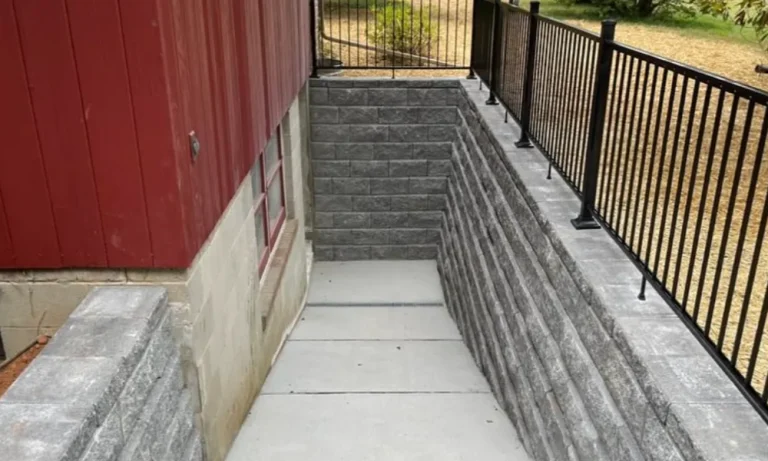
Terracing can turn a steep area into level zones for gardens, seating, or even a future outdoor living project. - Water is moving toward the foundation or a lower-level entry
Strategic wall placement, combined with grading and drainage routing, can redirect water away from vulnerable areas.
- Your yard has a noticeable slope and runoff keeps cutting through beds
Retaining walls work best when paired with the right drainage systems
In most “soggy yard” projects, the retaining wall is one piece of a larger water-management plan. The best results usually come from combining:
-
- Regrading to correct the overall slope and remove low spots
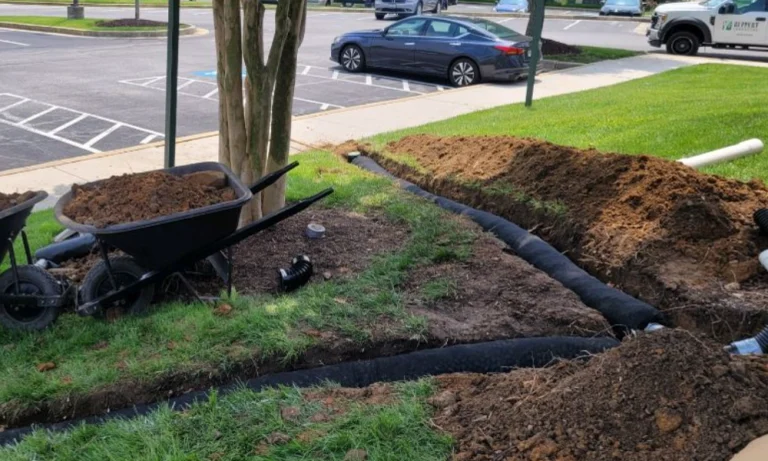
- French drains or collection points tied into a safe discharge route
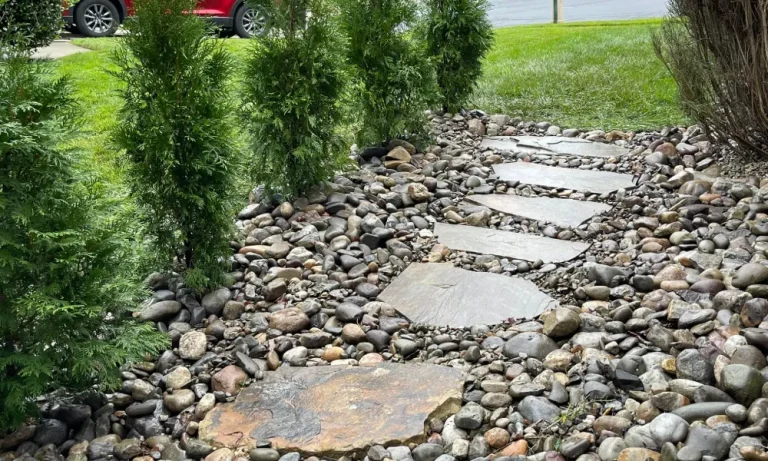
- Dry creek beds or swales when water needs a visible, natural path through the yard
- Downspout routing so roof runoff isn’t dumping into the problem area
- Hardscape pitch corrections so patios and paths shed water properly
When we build retaining walls, we’re also thinking about how the wall connects to the rest of the landscape, including hardscaping, planting, and long-term drainage performance.
Real example: Fixing a soggy slope in Forest Hill
A homeowner in Forest Hill reached out after every heavy rain turned their backyard into mud. The slope pushed water straight toward the house, and the mulch beds kept washing out.
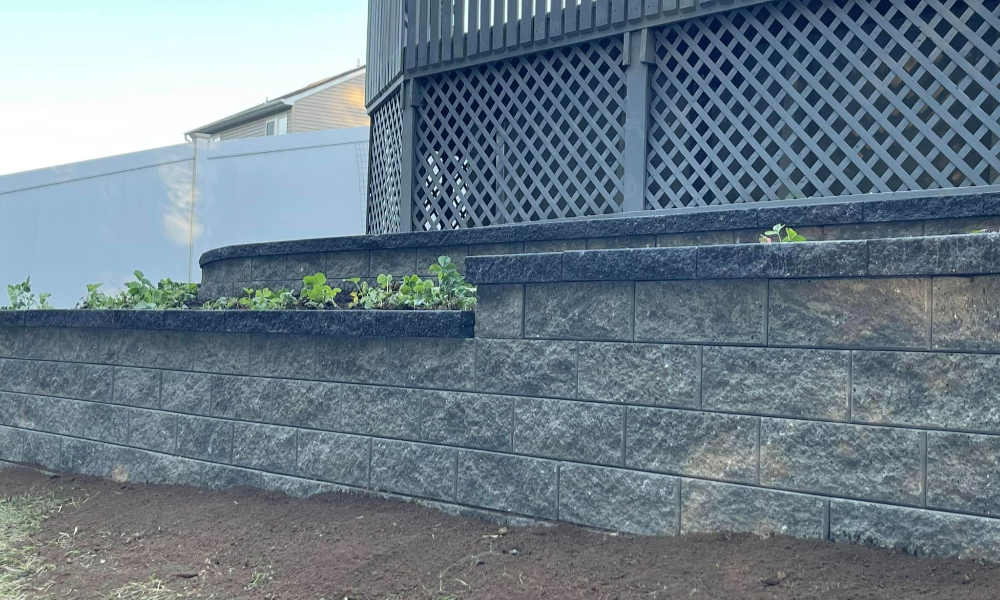
We installed a two-tier retaining wall system, added proper drainage behind the wall structure, regraded the surrounding lawn to redirect runoff, and tied in drainage routing so water had a real exit path. The difference was immediate: the yard dried out faster, erosion stopped, and the space became usable again.
Our approach to drainage and retaining wall design
At Harvest Outdoor Living, we don’t sell walls as a one-size-fits-all answer. We start with a site evaluation to understand where water is coming from, where it’s getting trapped, and what it needs to do instead.
Our process often includes:
-
- Drainage-focused layout planning and grading strategy
- Segmental block and natural stone retaining wall construction built for long-term performance
- Drainage system integration (stone backfill, fabric separation, and pipe routing)
- Optional upgrades like steps, walkways, or a new paver patio once the site is stable
Proudly serving Harford County and surrounding areas
Harvest Outdoor Living provides retaining wall construction and drainage solutions across:
-
- Abingdon
- Aberdeen
- Bel Air
- Churchville
- Fallston
- Forest Hill
- Havre De Grace
- Jarrettsville
- Perry Hall
- White Marsh
Let’s stop the water and reclaim your backyard
If you’re tired of puddles, erosion, and losing parts of your yard to poor drainage, we can help. A retaining wall may be the right move, or it may be one part of a better overall plan.
Request an estimate here and we’ll take a look at your property, explain what’s causing the problem, and recommend a solution that actually holds up through Maryland’s wet seasons.