How Much Does a New Lawn Cost in Harford County?
A new lawn can make a home feel completely different. It improves curb appeal, creates a clean backdrop for garden beds and hardscaping, and makes the yard far more usable for kids, pets, and entertaining. If you are in Bel Air or anywhere in Harford County and you are wondering what a new lawn actually costs, you are asking the right question. Pricing varies widely based on site prep, drainage, and whether you choose sod, traditional seed, or hydroseeding.
At Harvest Outdoor Living, we install new lawns for homeowners throughout Harford County using the method that fits the property and the goal, not a one-size-fits-all approach. In this guide, we’ll explain what drives lawn installation cost, how sod, seed, and hydroseeding compare, what timeline and maintenance look like, and how to plan the project so your lawn actually holds up long term in Maryland conditions.
Why a new lawn is a smart landscape investment
A lawn is not just “green coverage.” It is one of the largest visual surfaces on most properties, and it affects how everything else looks. New sod or seed also solves common usability problems, like muddy patches, bare soil that washes downhill, or a yard that feels rough and uneven.
A professionally installed lawn can:
-
- Create a clean, finished look that improves curb appeal immediately
- Reduce erosion and runoff when grading and soil prep are done correctly
- Make the yard more usable for play, entertaining, and everyday living
- Improve the look of surrounding beds, patios, and walkways by providing a uniform backdrop
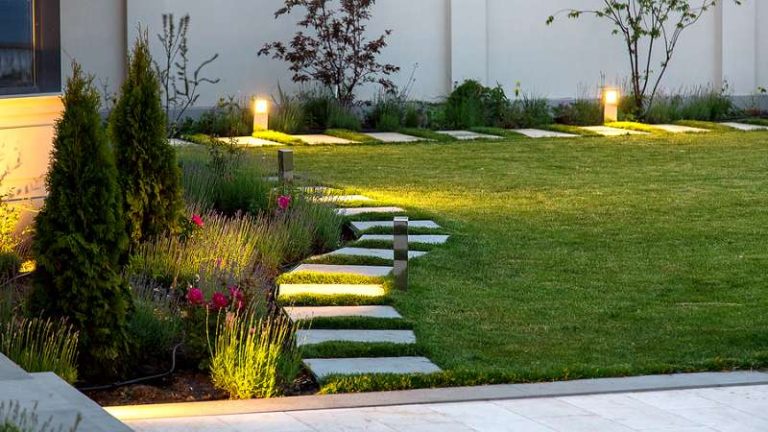
A lawn also works best when it is part of a complete landscape plan. Many homeowners install a new lawn after building a paver patio, adding walkways, reworking drainage, or installing new garden beds. When the sequence is planned properly, the finished result looks cohesive and stays healthier long term.
Best lawn installation options for Harford County homes
Most lawn projects fall into one of three categories: sod, traditional seed, or hydroseeding. The right choice depends on your budget, timeline, sun exposure, slope, and how much you can commit to watering during establishment.
Here are the three most common options we install for homeowners in Harford County:
1. Sod installation
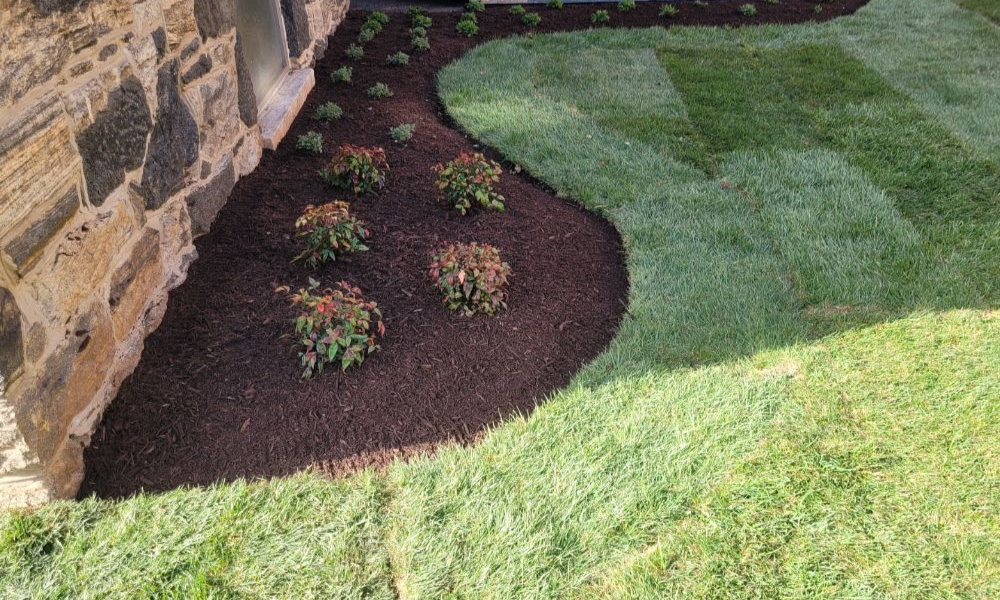
Sod is the fastest way to get a dense, finished lawn. It is installed as rolls of mature turf that provide immediate coverage. Sod is especially helpful when erosion is a concern, or when you want the yard to look finished right away.
What to expect:
-
-
- Instant green lawn with uniform coverage
- Higher upfront cost due to material and labor
- Strong erosion control on sloped or washed-out areas
-
Best use: Front yards, high-visibility areas, sloped properties in places like Forest Hill and Fallston, and homeowners who want fast results.
2. Traditional seeding
Traditional seeding is the most budget-friendly method, but it requires patience and good early-stage care. Seed works well when you have time for germination and you can keep the soil consistently moist. It is also common for larger areas where sod would be cost-prohibitive.
What to expect:
-
-
- Lower cost per square foot compared to sod
- More vulnerability to washout if the site is sloped or drainage is poor
- Requires careful watering and weed monitoring early on
-
Best use: Backyards with stable grading, homeowners on a tighter budget, and projects where timing is flexible.
3. Hydroseeding
Hydroseeding sprays a slurry of seed, water, fertilizer, and mulch across the soil for more even coverage than traditional broadcast seeding. It is often a great middle-ground option, especially for larger areas or sites where erosion risk is moderate.
What to expect:
-
-
- More uniform coverage and faster visible results than traditional seed
- Typically costs more than seed but less than sod
- Often performs well on gentle slopes when paired with correct prep
-
Best use: Medium to large lawns in areas like Abingdon and Bel Air, and homeowners who want a stronger start than traditional seed without the cost of sod.
Choosing between these options is not just about the lawn product. It is also about the condition of the site. During a visit, we evaluate grading, soil quality, compaction, sun exposure, and runoff so the method you choose actually performs.
Timeline and long-term expectations
One of the biggest misunderstandings homeowners have is expecting all lawn methods to behave the same. Sod looks finished immediately, but still needs time to root. Seed and hydroseed take longer to look “done,” but can produce a great lawn when the establishment window is respected.
Here is a realistic expectation of timing:
-
- Sod: Looks finished right away, typically establishes roots over the following weeks with consistent watering
- Seed: Germination can take a few weeks depending on weather, with thicker coverage building over time
- Hydroseed: Often shows growth sooner and more evenly than traditional seed, with coverage thickening over the first month or two
The other major expectation is traffic. New lawns cannot handle the same foot traffic as established turf. If you install a new lawn and immediately treat it like a mature yard, you will likely see damage in high-use areas. We help homeowners plan for this, especially families with kids and pets.
Professional installation matters here because the timeline only goes smoothly if the base is correct. If the yard is lumpy, compacted, or holds water, the lawn will struggle regardless of whether it is sod or seed.
Maintenance and irrigation considerations
A new lawn is not “set it and forget it.” The first month or two often determines whether the lawn thickens and roots properly, or stays weak and patchy.
Watering: The biggest requirement is consistent moisture during establishment. Sod needs frequent watering early, then a transition to deeper watering. Seed and hydroseed need a moist surface until germination and early root development. If a property has uneven watering coverage or limited hose reach, the lawn may struggle without a plan.
Soil and grading: Many lawn failures happen because the yard was not graded correctly before installation. Low areas collect water, high areas dry out, and the lawn becomes uneven in both appearance and health. If you already have pooling problems, it often makes sense to address them with drainage solutions before installing the lawn.
Edges and surrounding features: Lawns look best and stay cleaner when they are properly defined around beds and hardscapes. Clean transitions reduce wash-in of soil, keep mulch where it belongs, and make mowing easier. Many homeowners combine lawn installation with new bed edging, mulch, or improvements to patios and walkways.
Anti DIY note: DIY lawn installs fail more often than homeowners expect because site prep is hard to do well without the right equipment. If the base is not properly graded and compacted, the lawn may look good briefly, then become uneven, thin, or muddy in problem spots. Professional installation is about getting the base right so the lawn lasts.
Cost comparison: sod vs seed vs hydroseed
Pricing for a new lawn in Harford County depends heavily on site preparation. A “simple” lawn install on a clean, level yard costs far less than a yard that needs old turf removed, grading corrected, new topsoil imported, or drainage addressed.
Here are typical starting ranges homeowners often see:
Sod installation
-
- Commonly priced per square foot, with total cost rising quickly as area increases
- Higher material and labor cost, but immediate curb appeal
- Often the most practical choice when erosion control is needed
Traditional seed
-
- Typically the lowest cost option
- Best value when the site is stable and you can commit to watering
- Can become expensive if repeated reseeding is needed due to poor prep or drainage
Hydroseeding
-
- Often sits between seed and sod cost-wise
- More uniform coverage than traditional seed in many cases
- Common for larger properties where sod is not the right budget fit
The most important part of budgeting is understanding the prep scope. Lawn cost is often driven by:
-
- Removing weeds or old turf and disposing of material
- Regrading and leveling to correct drainage and improve appearance
- Adding topsoil or compost to improve soil structure
- Fixing compacted soil so roots can establish
- Correcting pooling or runoff patterns that will damage the new lawn
If your project also includes upgrading the yard around the lawn, like a new patio, walkway, or retaining work, it helps to review both the Landscape Pricing Guide and the Hardscape Pricing Guide. Many homeowners plan lawn installation as the final step after hardscape construction and drainage work, because it protects the new turf from damage during heavier construction.
Mini case study: Forest Hill sod installation with grading corrections
A homeowner in Forest Hill contacted us because their lawn was mostly weeds and bare soil, and water would run across the yard during storms and settle in low spots. They wanted an instant improvement, but they also wanted the lawn to hold up long term instead of becoming patchy again.
We removed the existing turf, corrected the grade to improve water movement, and installed a new sod lawn with proper soil preparation. The result was an immediately lush, even surface that dramatically improved the look and usability of the yard. Just as important, the drainage and grading corrections helped the lawn stay healthier and reduced the muddy areas that had been a constant frustration.
Proudly serving Harford County and beyond
Harvest Outdoor Living provides professional lawn installation, landscaping, and outdoor construction services in:
-
- Bel Air
- Abingdon
- Aberdeen
- Churchville
- Fallston
- Forest Hill
- Havre De Grace
- Jarrettsville
- Perry Hall
- White Marsh
- And surrounding Harford County areas
If you are unsure whether your property is within our service range, you can view the full list on our service area page.
Ready for a lawn that actually lasts?
If you are tired of patchy grass, muddy areas, and constant reseeding, let’s build a lawn with the right foundation.
The best lawns start with correct site preparation, proper grading, and a realistic plan for watering and establishment. Our team will evaluate your property, explain whether sod, seed, or hydroseeding makes the most sense, and provide a clear estimate that reflects what your yard needs to succeed.
Request your estimate today and let’s install a new lawn that looks great, performs well, and holds up long term in Harford County.