How Much Does It Cost to Build a Backyard Patio?
Planning a backyard patio in Bel Air usually starts with one practical question, what does it actually cost? If you have been browsing ideas online, you have probably seen pricing all over the map, and most of it ignores the realities of site conditions in Harford County. The truth is, a patio is not just pavers on the surface. The long-term performance comes from excavation depth, base build, drainage planning, and the details that keep everything tight through Maryland’s freeze-thaw cycles.
At Harvest Outdoor Living, we build backyard patios that are designed around how you actually live, then installed to hold up long term. Homeowners choose us because we focus on proper base prep and drainage, not shortcuts, and our local reputation reflects that with 41 five-star reviews. In this guide, we’ll break down realistic patio cost ranges, what drives pricing up or down, what you can expect at different investment levels, and how to plan a patio that still looks great years from now.
Why a backyard patio is a smart investment
A patio is one of the few upgrades that improves daily life and resale value at the same time. It creates usable square footage outdoors, makes entertaining easier, and helps your yard feel finished instead of “just grass.” In communities like Forest Hill, Fallston, and Jarrettsville, where many properties have great outdoor potential but uneven grades and drainage challenges, a properly built patio can also solve functional issues that homeowners have been living with for years.
A well-planned patio can:
-
- Create a dedicated space for grilling, dining, and relaxing without muddy lawn wear
- Improve drainage and reduce pooling when the grading is designed correctly
- Increase curb appeal and resale value through a permanent hardscape upgrade
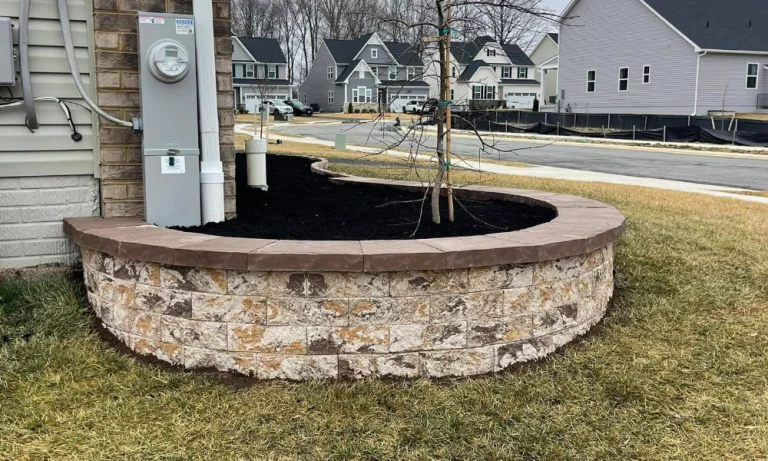
- Support future additions like seating walls, steps, lighting, or an outdoor kitchen
When paired with elements like walkways and pathways, surrounding planting beds, or a low retaining wall to manage a slope, a patio stops feeling like a standalone project and starts functioning as a complete backyard plan.
What drives patio pricing in Harford County?
Two patios can have the same square footage and still cost very different amounts. The difference is usually not “markup,” it is what the site requires for the patio to be stable, drain properly, and match the home.
Here are the biggest cost drivers we see across Harford County:
1. Material and pattern selection
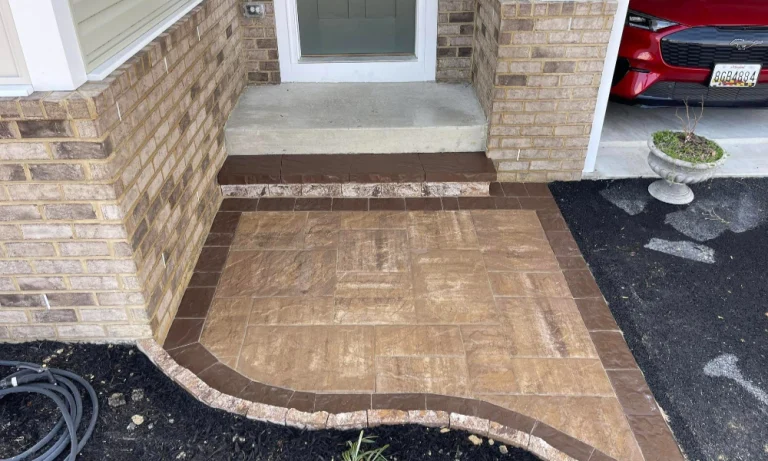
Material choice changes both the look and the labor. Standard concrete pavers are durable and cost-effective, while premium options, textured blends, borders, inlays, and specialty patterns increase material costs and installation time.
What to expect:
-
-
- Basic pavers and simple layouts fall on the lower end of the range
- Upgraded color blends, borders, and inlays increase labor and waste factors
- Premium brands and advanced patterns raise both materials and install time
-
Best use: Homeowners who want a patio that looks intentional, not generic, and matches the home’s style.
2. Base construction and drainage requirements
This is where long-term performance is decided. If excavation depth, compaction, and drainage are wrong, the patio may look fine for a season or two, then settle, shift, or hold water. In Maryland, freeze-thaw cycles and saturated soils make base prep non-negotiable.
What to expect:
-
-
- More excavation and base stone on sites with poor soil or heavy clay
- Additional grading where water currently drains toward the house
- Integration with drainage solutions when runoff or pooling is already a problem
-
Best use: Every patio, because a beautiful surface does not matter if the structure underneath fails.
3. Yard layout, access, and elevation changes
A flat backyard with wide access is faster and more efficient to build than a sloped yard, tight side access, or a space that requires hand work. Elevation changes may require steps, walls, or more intensive grading, all of which affect cost.
What to expect:
-
-
- Higher labor costs when equipment cannot reach the build area easily
- More complexity on properties that need leveling or terracing
- Added scope when the patio must connect to doors, pools, or existing structures cleanly
-
Best use: Sloped yards or tight lots in areas like Fallston and Forest Hill, where thoughtful layout prevents future drainage and settling issues.
Patio cost ranges and what you can realistically expect
Patio budgets make the most sense when you tie them to function, size, and features, not just square footage. Below are practical ranges we use when homeowners ask what is typical.
1. $5,000 to $15,000
This range typically covers a smaller patio built for simple use, grilling, a couple of chairs, or a compact dining setup. It is a great option when you want a reliable hardscape surface without major add-ons.
What to expect:
-
-
- Often roughly 150 to 300 square feet depending on layout and site conditions
- Standard paver selection with clean edges and proper base preparation
- Basic grading so water moves away from the patio surface
-
Best use: Homeowners who want a durable outdoor surface now and may expand later with beds, lighting, or additional hardscape.
2. $15,000 to $50,000
This is the most common investment range for a backyard patio that feels like a true outdoor living space. It usually allows for better sizing, stronger design, and the first layer of upgrades that make the patio more comfortable and visually complete.
What to expect:
-
-
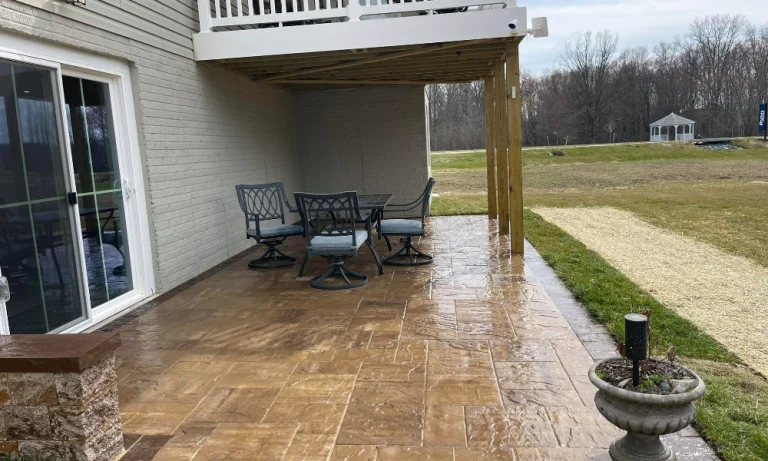
- Larger patio footprint for dining and lounging zones
- Upgraded pavers, borders, or inlays for a more finished look
- Common add-ons like seating walls, steps, or integrated planting areas
-
Best use: Families who entertain, want a patio that feels designed, and want the flexibility to add features over time.
3. $50,000 to $150,000+
This range supports complete backyard transformations, where the patio is only one part of a larger plan. These projects often require more grading, multiple elevations, and features that extend the season and expand how you use the yard.
What to expect:
-
-
- Multi-zone patios with defined dining, lounge, and gathering areas
- Higher-end features like outdoor kitchens and firepits
- Grade management with walls, steps, or multi-level patios that feel seamless
-
Best use: Homeowners who want a full outdoor living environment that feels custom to the property and lifestyle.
Planning, maintenance, and long-term performance
A patio should not become a maintenance project. The goal is a surface that stays level, drains correctly, and does not require constant touch-ups.
Drainage: A patio needs intentional pitch and a plan for where water goes. In many yards, the best approach includes pairing patio construction with drainage solutions so runoff is controlled instead of pooling at edges or flowing toward the foundation.
Joint stability: Joint material and edge restraint matter more than most homeowners realize. When those details are done right, the patio holds its shape through seasons of expansion and contraction.
Surrounding landscape: Many patios look unfinished because the border is ignored. A defined planting bed, mulch installation, or structured garden edge helps the patio feel intentional and keeps soil from washing onto the surface.
Lighting: A patio is used at night more than people expect. Integrating landscape lighting improves safety on steps, creates ambiance, and makes the backyard feel usable after dark.
This is also why DIY patios are risky. Most failures are not about paver choice, they come from base shortcuts, poor compaction, and drainage that was never properly planned.
Cost comparison: simple patio vs complete outdoor living build
A helpful way to think about pricing is to separate “patio only” from “patio plus the elements that make it feel finished.”
Patio-focused build
-
- Primarily the paver surface with proper base, grading, and clean edges
- Limited add-ons, often designed for future phases
- Best when you want immediate function and predictable investment
Patio as part of a full backyard plan
-
- Multiple zones, features, and surrounding landscape integration
- Often includes steps, walls, drainage upgrades, and lighting
- Best when you want a cohesive outdoor space that feels complete immediately
If you are comparing options, reviewing the Landscape Pricing Guide and Hardscape Pricing Guide can help you plan realistically. Many homeowners find that bundling complementary work, like drainage correction, planting beds, or step transitions, is more efficient than revisiting the same areas later.
Mini case study: a Bel Air patio built for real use
A homeowner in Bel Air contacted us because their backyard had become a mud zone every spring and fall. They wanted a patio for dining and grilling, but they also wanted to avoid water pooling against the house and didn’t want to “guess” at the right size.
After evaluating the yard and natural drainage patterns, we designed a patio layout with clear zones for a grill area and dining space, then planned grading so runoff moved away from the home. We also recommended surrounding planting beds to soften the edges and reduce wash-in of soil onto the patio surface. The result was a backyard that finally felt usable, even after rain, and a patio that looked like it belonged with the home rather than sitting on top of the yard.
That is the difference between a patio that is simply installed and a patio that is designed as part of the property.
Proudly serving Harford County and beyond
Harvest Outdoor Living provides professional patio construction, landscape design, and hardscape installation in:
-
- Bel Air
- Abingdon
- Aberdeen
- Churchville
- Fallston
- Forest Hill
- Havre De Grace
- Jarrettsville
- Perry Hall
- White Marsh
- And surrounding Harford County areas
If you are unsure whether your property is within our service range, you can view the full list on our service area page.
Ready for a patio that is built right the first time?
If you want clear pricing guidance and a backyard patio that stays level, drains properly, and looks finished, we’d love to help.
A patio is a major investment, and the smartest first step is a site evaluation that looks at slope, drainage, access, and how you want to use the space. Our team will walk you through layout options, material choices, and realistic budget ranges, then provide a clear estimate based on your property.
Request your estimate today and let’s plan a backyard patio that fits your home, your lifestyle, and Maryland conditions.