Landscaping Around a Walkout Basement, Solutions for Sloped Yards
Walkout basements are a big perk for Maryland homeowners, but the yard outside them can be frustrating. In Harford County, these lower-level exits are often cut into an existing slope, which can leave you with awkward grades, soggy areas after rain, and a space that never feels finished. Even when the inside of the basement is beautiful, the outside can feel like an afterthought.
At Harvest Outdoor Living, we help homeowners throughout Harford County turn walkout basement areas into outdoor spaces that feel intentional and usable. The key is to treat the area like a system, the slope, the drainage, the hardscape, and the planting all need to work together. In this guide, we’ll break down the most common challenges, the best solutions for long-term performance, and how to plan a layout that looks great and functions in Maryland weather.
Why walkout basement landscaping is so challenging
Most walkout basements are built where the lot drops away, which means you are working in a zone where water naturally wants to travel. If the area was never designed for outdoor living, you end up with a collection of problems that feed into each other.
Common issues include:
-
- Uneven terrain that limits where you can place patios, beds, and steps
- Runoff and saturation near the foundation and door thresholds
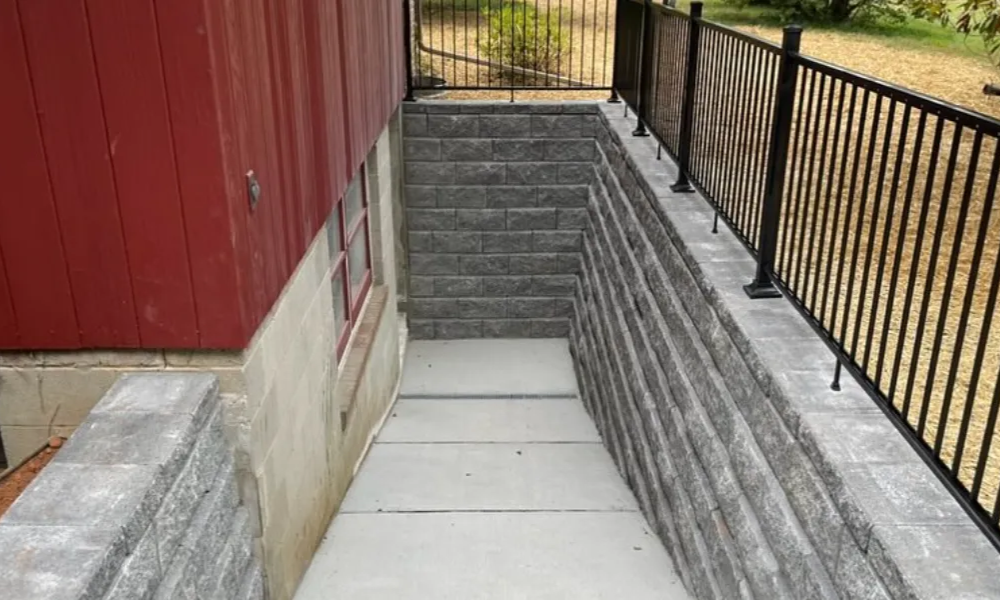
- Sunken stairwells that feel disconnected from the backyard
- Erosion that strips mulch, exposes roots, and creates muddy edges
The good news is that these challenges are predictable. With proper planning and construction, walkout basement areas often become one of the most comfortable parts of the property because they are naturally sheltered, private, and perfect for a lower-level gathering space.
Six high-impact solutions for walkout basement yards
The best projects start by stabilizing the slope, controlling water, then building the usable space. Here are the most effective solutions we use across Bel Air, Fallston, Forest Hill, and Jarrettsville.
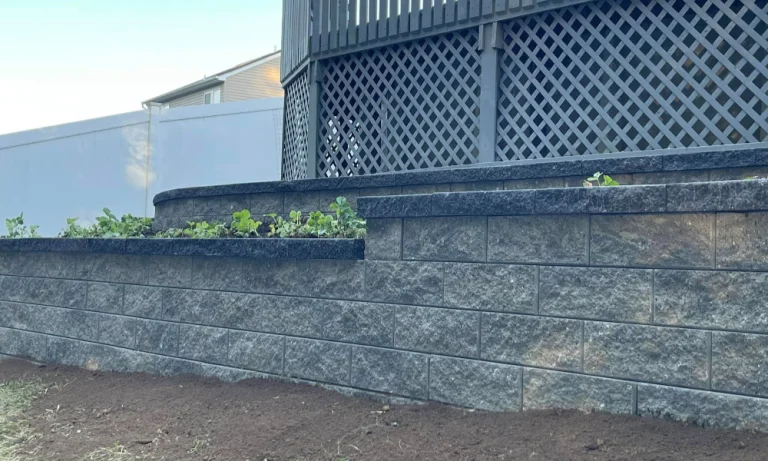
1. Retaining walls to create level space
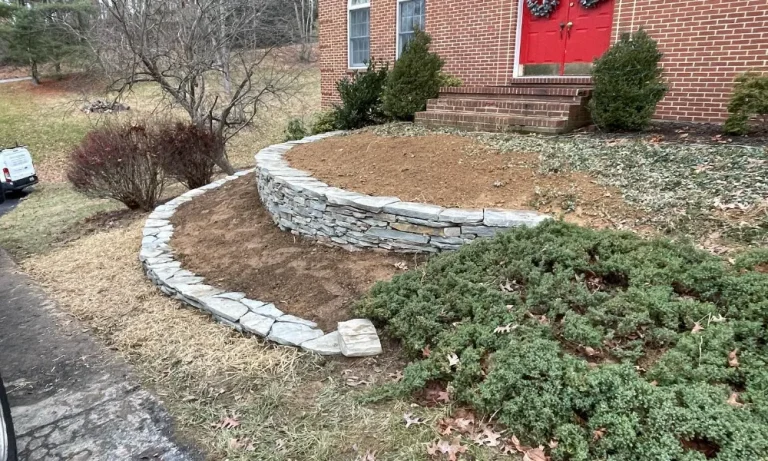
When the ground drops off quickly, you cannot force a patio or lawn panel onto it without first managing the grade. A properly built retaining wall allows us to carve out flat zones, stabilize soil, and create clean transitions that feel like part of the original home design.
What to expect:
-
-
- Level areas for patios, planting beds, or lawn sections
- Reduced erosion and slope movement during heavy rain
- Cleaner lines and a more finished look around the walkout zone
-
Best use: Any walkout basement where the slope prevents usable space or creates washouts near the foundation and stairwell edges.
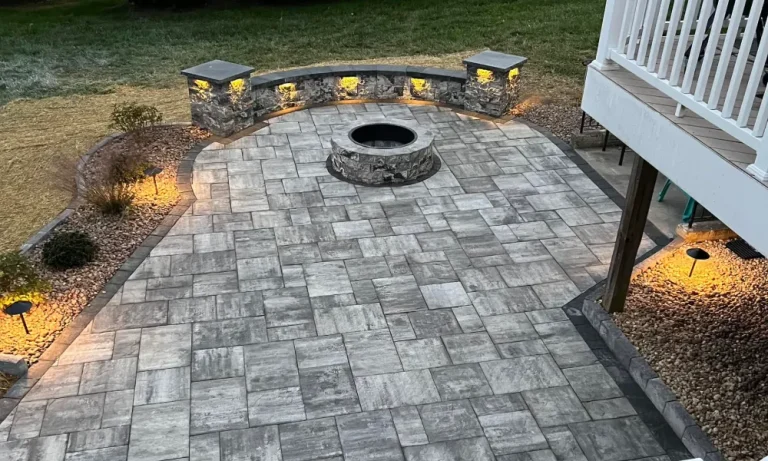
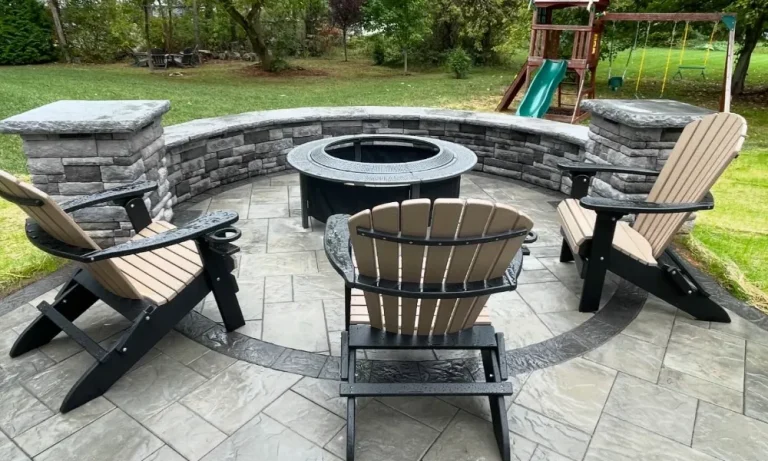
2. A lower-level paver patio for real outdoor living
A walkout basement is a natural place for a paver patio because it creates a clean, dry surface right outside the door. The most important piece is building it to handle runoff and seasonal movement. Base prep, compaction, and pitch determine whether the patio stays level and drains properly.
What to expect:
-
-
- A defined space for seating, dining, or a grill zone
- Better control of muddy conditions right outside the basement door
- The ability to expand with future features like steps, walls, or an outdoor kitchen
-
Best use: Homeowners who want the walkout to function like a true extension of the home, not a door that opens into a problem area.
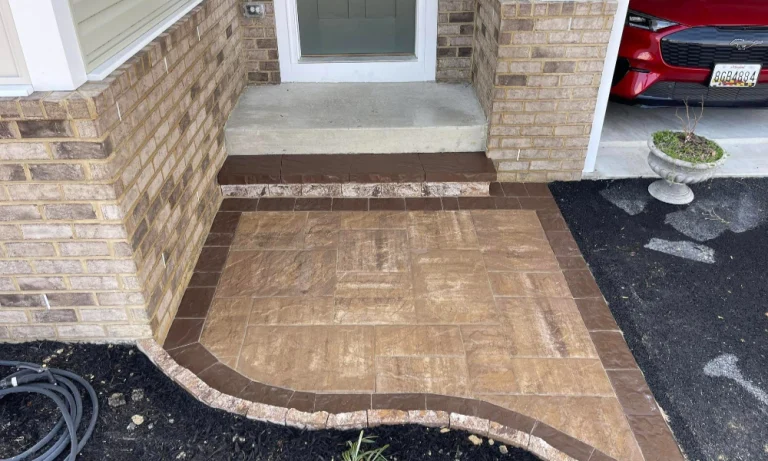
3. Steps, landings, and safer transitions between elevations
One of the most common frustrations is the “disconnected” feeling between the walkout level and the rest of the backyard. Long, steep stair runs and narrow landings make the space feel like a utility path, not part of the yard. Upgrading to paver or stone steps, adding landings, and aligning paths correctly changes how the space feels immediately.
What to expect:
-
-
- Safer, more comfortable movement between levels
- Better flow from the patio into the yard and other outdoor areas
- Cleaner integration with walkways and pathways
-
Best use: Homes with steep side yards, awkward stairwells, or long runs that feel exposed or unsafe.
4. Drainage solutions that protect the foundation
Water management is the make-or-break factor around walkout basements. If runoff is allowed to collect near the door, stairwell, or foundation wall, it creates long-term issues and can also undermine patios, steps, and walls. We solve these problems with integrated drainage solutions designed around your property’s natural flow path.
What to expect:
-
-
- Grading adjustments that redirect surface water away from the home
- Options like French drains, swales, or dry creek beds based on layout
- Downspout routing that prevents concentrated water from dumping into the walkout zone
-
Best use: Any yard where you see pooling, muddy stairwell bottoms, or signs of erosion after storms.
5. Tiered garden beds and slope-friendly landscaping
Slopes are not automatically a problem, but they need the right planting strategy. Instead of trying to maintain grass on steep grades, we often build tiered beds with stabilizing plant material that holds soil and looks great through the seasons. This can also reduce the maintenance burden because you are not constantly battling washouts.
What to expect:
-
-
- Planting that stabilizes soil and softens hardscape edges
- Cleaner bed definition with mulch or decorative stone that stays in place
- A more natural transition between upper lawn areas and the lower patio level
-
Best use: Yards where grass struggles on the slope or where mulch continually washes downhill.
6. Privacy, lighting, and comfort upgrades
Lower-level spaces can feel exposed because you are below the main yard grade and sometimes visible from neighboring windows. The fix is usually a combination of strategic planting, walls, and lighting so the walkout area feels like a destination, not a leftover corner of the yard.
What to expect:
-
-
- Evergreen screening or layered plantings for privacy and softness
- Subtle landscape lighting for steps, paths, and nighttime ambiance
- Comfort improvements like seating walls or shade structures when appropriate
-
Best use: Homes where the walkout level is visible from neighbors, or where the area feels dark and disconnected after sunset.
Planning the project so it works long term
Walkout basement yards are not good candidates for piecemeal DIY fixes. You can add gravel, drop in a few plants, or build small edging, but if water and grade issues are not handled correctly, the space will continue to feel messy and unreliable.
A professional plan ties everything together:
-
- How water enters the area and where it exits safely
- Where walls are needed for stability and where planting can do the job
- How steps and paths connect the lower level to the rest of the yard
- How the patio, beds, and lighting work as one cohesive design
If you are budgeting and comparing options, it helps to review both the Landscape Pricing Guide and Hardscape Pricing Guide. Walkout basement projects often involve both, because the best outcome usually combines grading and plantings with retaining walls, steps, and patio construction.
Mini case study: turning a walkout slope into usable outdoor space
A homeowner in Abingdon reached out because the area outside their walkout basement stayed muddy, the steps felt awkward, and runoff carved channels through the slope after storms. They wanted a patio, but they also wanted to stop water from collecting near the door and stairwell.
We started by evaluating grade and drainage, then designed a solution that stabilized the slope with retaining walls and tiered planting zones. We created a lower-level paver patio for seating and added a more comfortable stair transition to connect the walkout level to the upper yard. The result was a space that felt finished, drained correctly, and finally got used daily instead of avoided.
Proudly serving Harford County and beyond
Harvest Outdoor Living provides professional walkout basement landscaping, hardscaping, and drainage solutions in:
-
- Bel Air
- Abingdon
- Aberdeen
- Churchville
- Fallston
- Forest Hill
- Havre De Grace
- Jarrettsville
- Perry Hall
- White Marsh
- And surrounding Harford County areas
If you are unsure whether your property is within our service range, you can view the full list on our service area page.
Ready to make your walkout basement area usable?
If you are tired of muddy slopes, awkward steps, or drainage problems outside your walkout basement, we can help you turn it into a finished outdoor living space.
The right solution starts with a property evaluation so we can understand grade, water flow, and how you want to use the space. From there, we can recommend a plan that combines drainage, walls, patios, steps, and landscaping in a way that holds up in Maryland conditions and actually feels good to live with.
Request your estimate today and let’s design a walkout basement landscape that looks intentional, drains properly, and finally gets used.