Incorporating Small Garden Retaining Walls Into Your Landscape
Sloped planting beds and uneven lawn transitions are common challenges for homeowners in Bel Air, Forest Hill, and surrounding Harford County communities. What starts as a minor grade change often turns into mulch washing into turf, exposed roots, and constant edge repairs. A properly built small garden retaining wall can solve those issues while adding clean structure to your landscape.
At Harvest Outdoor Living, we design and install retaining walls that are engineered for Maryland’s clay-heavy soils, heavy rain events, and freeze-thaw cycles. In this guide, we’ll explain what a garden retaining wall actually does, where it works best, how material choice affects performance, and why base preparation and drainage determine whether your wall lasts five years or twenty.
What is a garden retaining wall?
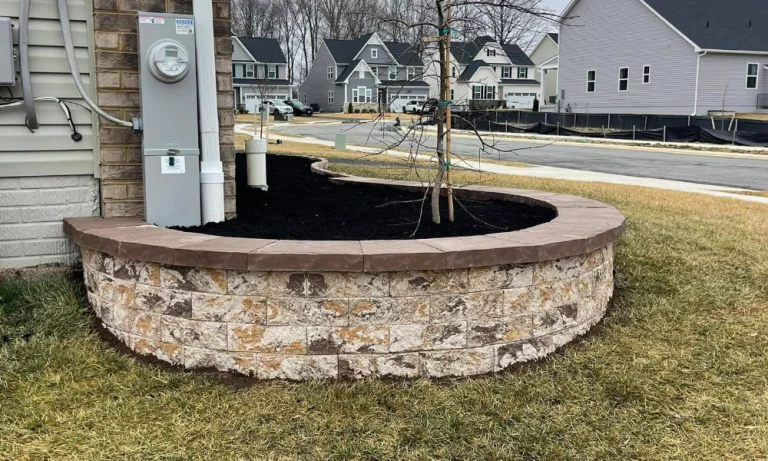
A garden retaining wall is a low structural wall designed to hold back soil, stabilize minor grade changes, and prevent erosion in landscaped areas. Unlike decorative edging, these walls are built to resist real lateral pressure from saturated soil.
You will commonly see them used to:
-
- Support raised planting beds
- Create level sections within a sloped yard
- Frame foundation beds or front yard landscapes
- Separate lawn areas from mulch or decorative stone
While they may appear small, they perform an important structural function. Treating them as simple stacked blocks without excavation, compacted base material, and drainage planning is one of the main reasons DIY walls fail across Harford County.
When built correctly, a garden retaining wall blends into the landscape and looks intentional, not added as an afterthought.
More than just structure: why homeowners add them
Small retaining walls improve both performance and appearance, especially in areas like Abingdon and Fallston where rolling terrain is common.
-
- Control erosion on mild slopes
By interrupting long slopes, the wall slows runoff and prevents soil from washing into lower lawn areas or hardscapes. - Create defined, contained beds
Mulch and planting soil stay in place, reducing the need for constant reshaping after storms. - Improve visual structure
The added height and clean line bring order to landscapes that feel flat or scattered. - Support other outdoor features
Walls can help transition into patios, walkways, or lawn panels without awkward grade changes. - Increase long-term property value
A stable, well-built retaining wall signals quality construction and thoughtful design.
- Control erosion on mild slopes
Five practical benefits of a professionally built garden wall
A small wall is rarely just about appearance. In most cases, it is installed to correct a recurring issue or unlock better use of space.
1. Creating level planting zones on uneven ground
Even slight slopes make planting difficult and cause soil migration over time. A retaining wall establishes flat, stable planting areas that allow shrubs, perennials, and seasonal color to thrive without constant adjustment.
What to expect:
-
-
- Improved root stability
- Cleaner bed lines that hold their shape
- Less downhill washout during heavy rain
-
2. Adding architectural depth to flat landscapes
In front yards throughout Churchville and Jarrettsville, we often see large open lawn panels with minimal definition. Introducing a low wall creates subtle elevation change and gives the landscape more dimension.
What to expect:
-
-
- Stronger visual separation between lawn and planting beds
- A more finished transition around entryways
- A landscape that looks intentionally designed
-
3. Long-term structural stability
Even low walls must withstand soil pressure, especially after prolonged rain when soil becomes saturated. Proper excavation, compacted aggregate base, and drainage stone behind the wall prevent leaning and settling.
What to expect:
-
-
- Reduced shifting during freeze-thaw cycles
- Straight alignment over time
- Protection against base erosion
-
4. Improved drainage control
Many Harford County homes deal with runoff flowing from higher lawn areas toward patios or foundation beds. When integrated with drainage solutions, a retaining wall helps redirect water and stabilize soil.
What to expect:
-
-
- Less pooling at bed edges
- Reduced undermining near walkways
- Better water flow management during storms
-
5. Lower long-term maintenance
Constantly redefining bed edges and replacing washed-out mulch becomes expensive and time consuming. A properly built wall contains materials and protects your investment in plants and soil.
What to expect:
-
-
- Cleaner bed appearance year-round
- Less weekly edging work
- More predictable maintenance costs
-
Choosing the right retaining wall materials
Material selection influences both durability and appearance. At Harvest Outdoor Living, we frequently install Cambridge wall systems because they offer consistent sizing, structural integrity, and color blends that complement Maryland homes.
When your project includes additional hardscape elements like paver patios or walkways, matching materials creates a cohesive look. Reviewing both the Landscape Pricing Guide and Hardscape Pricing Guide helps you understand how wall height, length, and material choice affect overall investment.
Popular Cambridge wall systems for garden applications
-
- Cambridge Olde English Wall – Tumbled texture suited for traditional Maryland homes.
- Cambridge MaytRx Wall System – Strong interlocking design for structural reliability.
- Cambridge Sigma Wall – Clean lines for more contemporary properties.
Selecting the right system depends on soil load, layout, and the aesthetic direction of your broader landscape design.
Strategic locations for small retaining walls
Placement determines whether a retaining wall solves a problem or simply adds cost. Here are common, practical uses across Harford County properties.
1. Framing raised flower beds
Low walls define bed boundaries and keep mulch contained, particularly near driveways or sidewalks.
What it improves:
-
-
- Reduced washout near pavement
- Cleaner visual lines
- Longer-lasting bed structure
-
2. Separating lawn from decorative stone areas
In properties throughout Perry Hall and White Marsh, walls are often used to create durable transitions between turf and stone mulch zones.
What it improves:
-
-
- Cleaner mowing lines
- Reduced material mixing
- Stronger visual contrast
-
3. Terracing mild backyard slopes
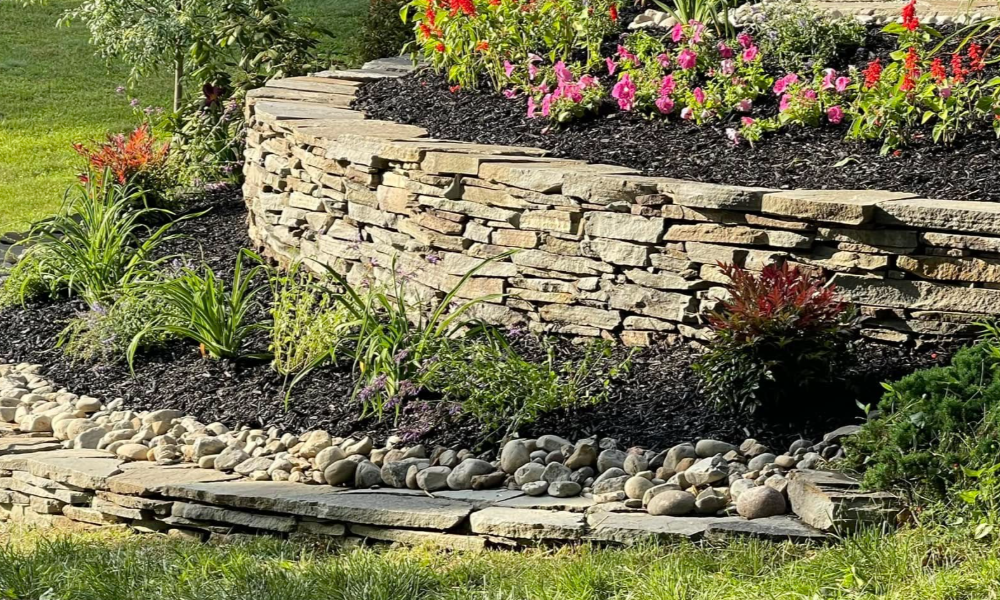
Tiered walls make sloped sections usable for planting and reduce erosion over time.
What it improves:
-
-
- More accessible planting zones
- Controlled runoff patterns
- A layered, high-end landscape appearance
-
4. Supporting steps and transitions
Walls can anchor step systems that connect patios, lawns, and side yards safely.
What it improves:
-
-
- Safer grade changes
- Better flow between elevations
- Cleaner integration with landscape lighting
-
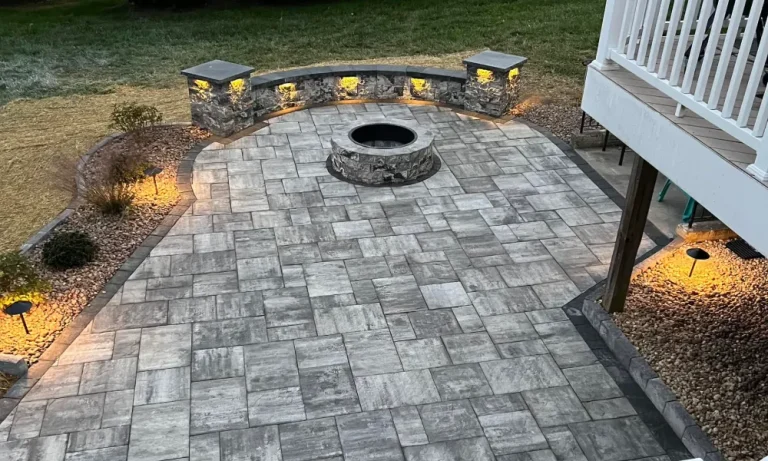
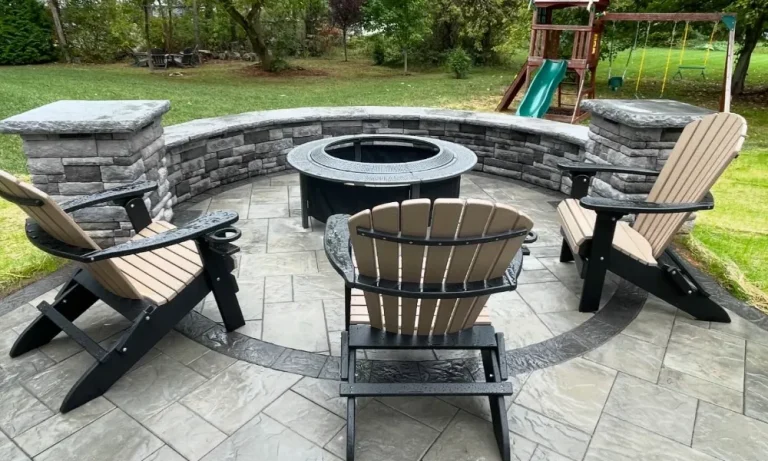
5. Integrating seating around patios or fire features
With the right height and cap, small walls double as seating around firepits or gathering areas.
What it improves:
-
-
- Built-in functionality
- Material continuity with patios
- More efficient use of space
-
Professional retaining wall installation in Harford County
Building a wall that lasts requires excavation to proper depth, compacted aggregate base, drainage stone backfill, and precise leveling. Skipping these steps leads to settling, leaning, and eventual reconstruction.
Our team at Harvest Outdoor Living handles retaining wall construction as part of comprehensive landscape design and outdoor living projects. Whether your wall supports planting beds or transitions into a patio or walkway, it is built to integrate with the full landscape plan.
In addition to retaining walls, we provide:
-
- Complete planting and landscape installation
- Paver patios and walkway construction
- Outdoor kitchens and fire features
- Drainage and erosion correction
- Landscape lighting and mulch installation
Proudly serving Harford County and beyond
Harvest Outdoor Living provides professional retaining wall construction and landscape services in:
-
- Bel Air
- Abingdon
- Aberdeen
- Churchville
- Fallston
- Forest Hill
- Havre De Grace
- Jarrettsville
- Perry Hall
- White Marsh
- And surrounding Harford County areas
If you are unsure whether your property falls within our service range, you can review the full list on our service area page.
Ready to stabilize and structure your landscape?
If your planting beds keep washing out or your yard feels uneven, a professionally built retaining wall may be the right solution.
We evaluate your grade, soil conditions, and long-term goals to design a wall that supports both structure and style. You will receive clear guidance on materials, scope, and budget before construction begins.
Request your estimate today and let’s build a retaining wall that protects your landscape and holds up through Maryland’s toughest seasons.