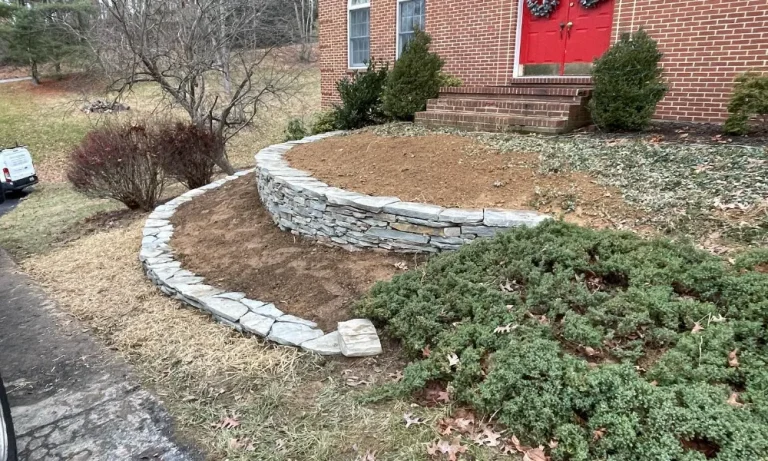
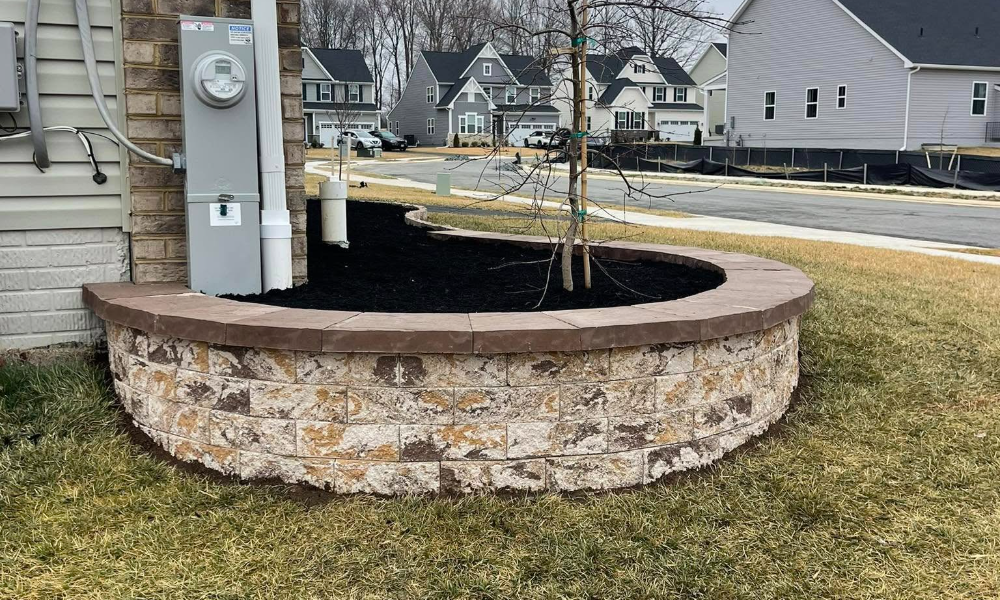
Why Retaining Walls Fail on Sloped Yards
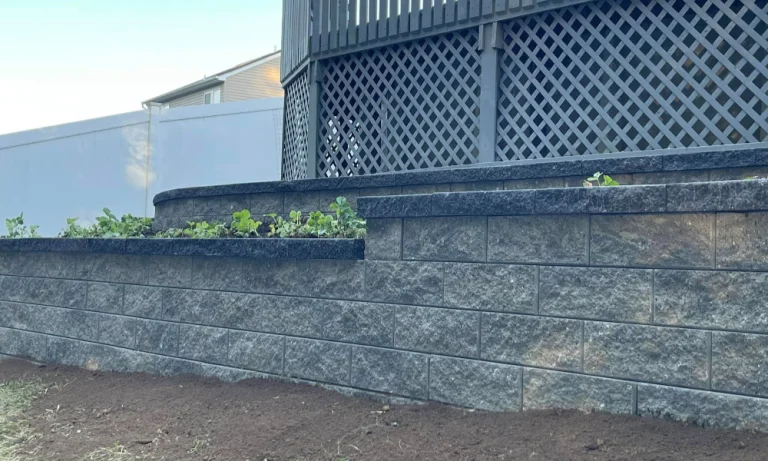
Retaining walls on sloped yards are one of the most common structural features we evaluate in Forest Hill and surrounding Harford County communities. When they fail, the damage is rarely cosmetic. It usually involves shifting soil, drainage issues, cracking, or complete structural collapse.
At Harvest Outdoor Living, we design and build retaining wall systems that are engineered for Maryland’s clay soils, freeze-thaw cycles, and heavy rain events. In this post, we’ll break down why retaining walls fail on sloped properties, the warning signs to watch for, and how to fix the problem permanently rather than patching it temporarily.
Why retaining walls are critical on sloped yards
Sloped properties are common throughout Forest Hill, Fallston, and Bel Air. While slopes can add character and elevation changes to a yard, they also create constant soil pressure. Without a properly built retaining wall, gravity and water will eventually move that soil downhill.
A professionally engineered retaining wall can:
-
- Create usable, level lawn or patio space
- Prevent erosion and soil washout
- Protect foundations, driveways, and walkways
- Manage water flow on your property
When walls are poorly constructed or built without proper drainage, they do the opposite. They trap water, lean forward, crack, and ultimately fail. On a sloped yard, failure can mean thousands of pounds of soil shifting unexpectedly.
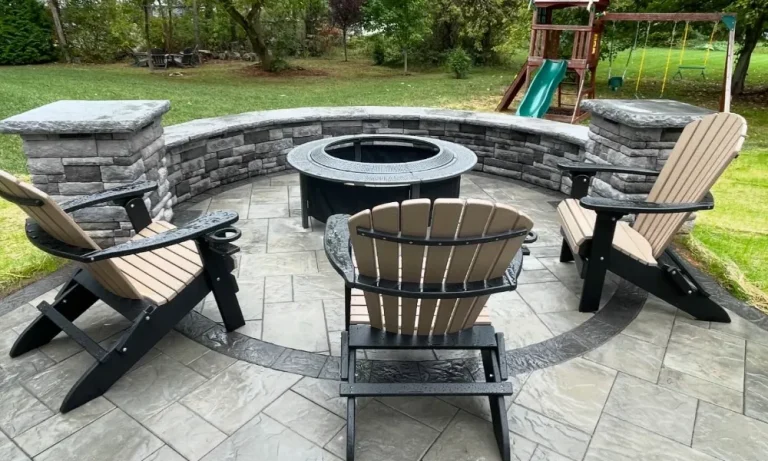
When paired with features like a paver patio, walkways, or upper lawn terraces, the wall must be built to handle both structural and aesthetic demands.
The most common reasons retaining walls fail
Many failed walls we inspect were not designed with long-term pressure and drainage in mind. Below are the most common causes we see in Harford County.
1. Poor drainage behind the wall
Water is the number one cause of retaining wall failure. When rainwater or groundwater cannot escape from behind the wall, hydrostatic pressure builds up.
What happens:
-
-
- The wall begins to lean forward
- Blocks separate or shift
- Cracks form in concrete walls
-
Permanent fix: A proper drainage system includes perforated drain pipe at the base, clean aggregate backfill, filter fabric, and sometimes surface grading adjustments. Simply drilling weep holes or adding surface drains rarely solves the root problem.
2. Inadequate base preparation
On sloped yards, the base must be excavated and compacted correctly. Many failing walls sit on shallow or improperly compacted bases.
What happens:
-
-
- Settlement causes uneven blocks
- Sections sink or tilt
- Cracking develops over time
-
Permanent fix: Rebuilding the wall with a properly excavated trench and compacted aggregate base. Surface patching or stacking additional blocks on top does not correct foundation failure.
3. No reinforcement or geogrid
Segmental retaining walls often require geogrid reinforcement when they exceed certain heights or support heavy loads such as driveways or patios.
What happens:
-
-
- The wall bows outward
- Soil separates from the structure
- Failure accelerates after heavy rain
-
Permanent fix: Engineering the wall with geogrid layers extending back into the slope, properly compacted lifts of soil, and manufacturer-specific installation guidelines.
4. Incorrect wall height or load planning
Some walls are built without considering surcharge loads such as vehicles, structures, or steep slopes directly above them.
What happens:
-
-
- Walls crack under unexpected pressure
- Driveways or patios above begin to shift
- Structural instability develops
-
Permanent fix: Proper site evaluation, load calculations, and in some cases tiered wall systems that distribute pressure instead of relying on one oversized structure.
Warning signs your retaining wall is failing
Retaining walls rarely collapse overnight. There are usually visible indicators months or even years in advance.
Look for:
-
- Leaning or bowing forward
- Horizontal cracking or separation between blocks
- Soil spilling from behind the wall
- Water pooling at the base
- Loose capstones or shifting sections
If you notice these signs, the safest approach is professional evaluation. Attempting to brace or patch a wall without correcting drainage or structural issues often makes the failure worse.
On sloped yards in Forest Hill, freeze-thaw cycles can accelerate minor structural problems quickly.
How to fix a failing retaining wall permanently
The only true permanent solution is correcting the structural and drainage issues at their source. In most cases, that means partial or full reconstruction.
At Harvest Outdoor Living, our permanent repair process typically includes:
-
- Full site inspection – We evaluate slope angle, soil type, water flow, and load conditions.
- Excavation and removal – Failing sections are dismantled to expose base and backfill.
- Drainage installation – Perforated pipe, aggregate, and filter fabric are installed properly.
- Reinforced rebuilding – We rebuild using manufacturer-approved block systems and geogrid reinforcement when required.
- Grading correction – Surface water is redirected away from the wall.
In some cases, we recommend redesigning the slope entirely with tiered walls or integrating outdoor living spaces into the new layout. This approach not only fixes the structural issue but transforms previously unusable space into functional areas.
Reviewing our Hardscape Pricing Guide can help homeowners understand how wall height, materials, and site access affect overall investment. If your wall repair connects with larger landscaping goals, our Landscape Pricing Guide provides helpful context as well.
Mini case study: Forest Hill slope stabilization
A homeowner in Forest Hill contacted us after noticing their 5-foot retaining wall leaning forward and separating along the top row. Heavy rains had saturated the clay soil behind the structure, and there was no visible drain system.
We removed the wall, excavated deeper to install a compacted aggregate base, added perforated drainage pipe with proper backfill, and reinforced the new wall with geogrid extending into the slope. We also regraded the upper lawn to redirect runoff.
The result was not just a stable retaining wall, but a safer yard with a new usable lawn terrace. The homeowner gained confidence that the issue was resolved permanently rather than temporarily patched.
Proudly serving Harford County and beyond
Harvest Outdoor Living provides professional retaining wall construction and slope stabilization in:
-
- Bel Air
- Abingdon
- Aberdeen
- Churchville
- Fallston
- Forest Hill
- Havre De Grace
- Jarrettsville
- Perry Hall
- White Marsh
- And surrounding Harford County areas
If you are unsure whether your property falls within our service range, you can review the full list on our service area page.
Concerned about your retaining wall?
If your retaining wall is leaning, cracking, or showing signs of movement, now is the time to act.
Sloped yard failures rarely fix themselves. Addressing drainage and structural deficiencies early can prevent costly damage to patios, driveways, and foundations. Our team will evaluate your wall, explain the root cause, and provide a clear path to a permanent solution.
Request your estimate today and protect your Forest Hill property with a retaining wall built to last.